



What Is the 10/40 Window, and How Does GFA World Work There?
If you have spent some time in Christian circles, especially those with a focus on mission work, you have likely heard the phrase “10/40 window” mentioned more than once, but what is the 10/40 window? The term was coined a few decades ago by missiologist Luis Bush to direct attention to a specific area of the world where there is a great need for the Gospel.[1] Put simply, it is a rectangular stretch located between 10 degrees north and 40 degrees north latitude and encompassing North Africa, the Middle East and South Asia. The window is also called “The Resistant Belt” since it contains most of the people who practice traditional Asia religions.[2] For many of those people, their religion is intrinsically tied to their culture and national identity, which makes sharing the Gospel very difficult within the window.

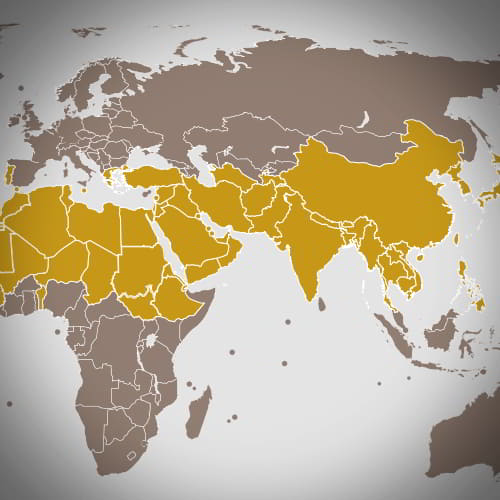
There are approximately 70 countries in the 10/40 window, and they vary greatly in economics, politics, religion, ancestral heritage, population size and climate. They all have in common their geographical location and a significant percentage of people who have not heard the Gospel. There has been some major progress in sharing the Good News in the window. For instance, in 1989, only four known Christians were living in Mongolia, and now the country has an estimated 10,000 native believers.[3] However, there is still a long way to go.
There is so much for believers to do in the 10/40 window; statistics serve to highlight this.
- Two-thirds of the world’s total population—about 4 billion people—live in the window.
- An alarming 95 percent of those 4 billion are considered unevangelized, and it is estimated that 1.6 billion of them have never heard about Jesus even once.
- Also, 87 percent of the window’s residents are considered the poorest of the poor in the world, living on an average of $250 per family annually.
- Even with this desperate spiritual and physical need, only $0.05 out of every $100 spent on missions globally is directed toward the 10/40 area.[4]
Organizations like GFA World have been working to understand, address and act on the question, “What is the 10/40 window?” Serving these people in a variety of ways, GFA seeks “to meet tangible needs of precious people and show God’s love to those who need it most.”[5]
A major part of GFA’s work is done by national missionaries. Today, more than 85 percent of Asian countries do not allow Western missionaries to minister freely. GFA’s national missionaries are from the areas where they work, so the constraints do not apply to them. They can work without restriction or interruption. Local people do not see national missionaries as outsiders because they know the culture and live the same way as the people they serve. They are sensitive to those around them and know how best to communicate the Gospel in a way that will be understood. Living among the people and understanding them lets the missionaries see the needs of the community, revealing tangible ways they can show God’s love, for instance through installation of Jesus wells, hosting free medical camps or distributing income-generating gifts.[6]
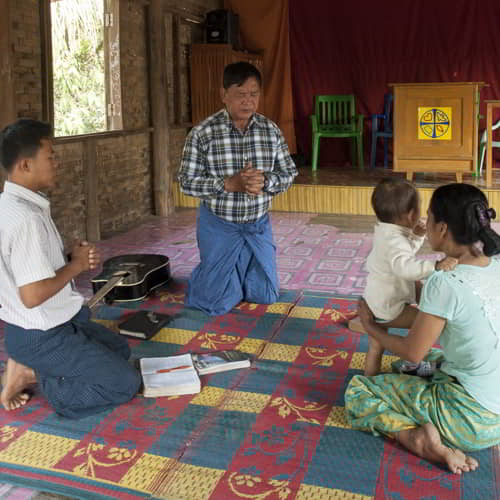
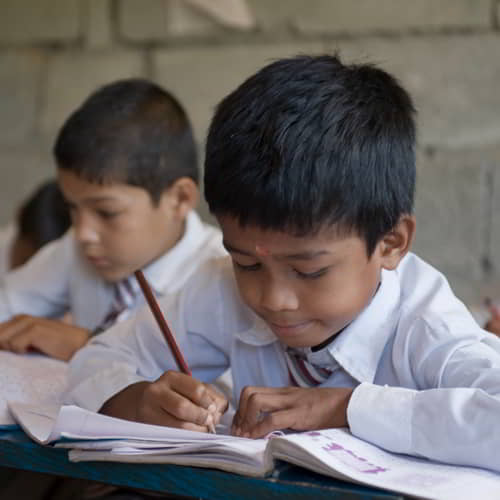
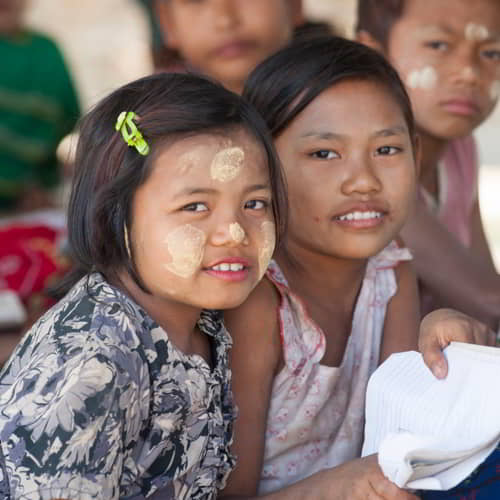
Another way GFA ministers within the 10/40 window is through our Child Sponsorship Program. Launched in 2004, the program works to free children from the cycle of poverty and start them on a path to a better future. Sponsored kids receive vital essentials like education assistance, food, clean water, hygiene training, healthcare and much more, all at no cost to them. These things set them up to succeed by preparing them for better jobs and helping them prevent diseases that would hinder their progress. And GFA doesn’t only focus on children. We use a community development model where children, their families and the whole community benefit as the program meets real needs. In this way, the kids and the people around them experience Christ and they come to know that God loves them.[7] They get hope for a bright future.
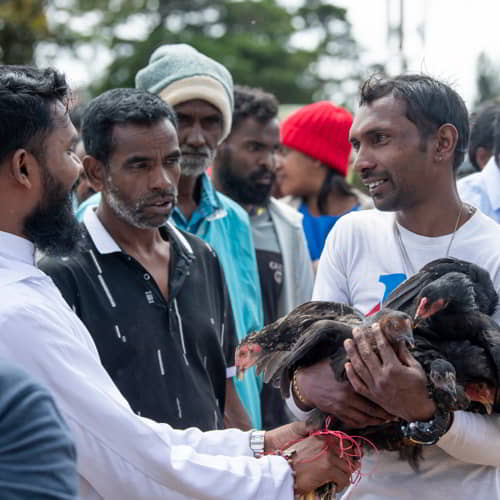
Because poverty is rampant between the 10/40 latitude lines, community development and lifting people out of poverty is vital to GFA’s ministry. A proven method of providing a way out of poverty is supplying income-generating gifts. Something as simple as a sewing machine or farm animal provides an extra source of income, helping individuals and families begin to thrive in a way not possible before. Sewing machines and the training to use them allow people to start their own tailoring businesses.[8] Cows produce milk that can be consumed—improving nutrition—or sold for a steadier income. The manure is a rich fertilizer for fields which can be sold or used to gain a more profitable harvest. When cows multiply, the offspring can be sold for even more income, multiplying the family’s hope for the future. Other animals like goats, pigs or chickens have similar effects, lifting a family’s prospects and spirits and showing God’s love for them.[9]
If you would like to get involved in this work to understand and address the important question, “What is the 10/40 window?” consider partnering with GFA in our efforts to do the same. It doesn’t take much to sponsor a national missionary or a child or provide a way out of poverty for someone living within the window. As physical needs are met, these people learn about the God who cares for them.
Learn more about missionaries in Africa[1] Culbertson, Howard. “10/40 Window: We Need To Be Stirred to Action!” Southern Nazarene University. Accessed July 15, 2023. https://home.snu.edu/~hculbert/1040.htm.
[2] “What Is the 10/40 Window?” Joshua Project. Accessed July 15, 2023. https://joshuaproject.net/resources/articles/10_40_window.
[3] Culbertson, Howard. “10/40 Window: We Need To Be Stirred to Action!” Southern Nazarene University. Accessed July 15, 2023. https://home.snu.edu/~hculbert/1040.htm.
[4] “The 10/40 Window.” Window International Network. Accessed July 15, 2023. https://www.win1040.org/about-the-1040-window/.
[5] “Our Ministries.” GFA World. Accessed July 15, 2023. https://www.gfa.org/ministries/.
[6] “National Missionaries: About National Missionaries.” GFA Word. Accessed July 15, 2023. https://www.gfa.org/sponsor/why-national-missionaries/.
[7] “Why Sponsor a Child with GFA World?” GFA World. Accessed July 15, 2023. https://www.gfa.org/sponsorachild/why-sponsor/.
[8] “Christmas Gift Catalog: Gifts for the Poor.” GFA World. Accessed July 15, 2023. https://www.gfa.org/gift/browse/gifts-for-the-poor/.
[9] “Christmas Gift Catalog: Gifts from the Stable.” GFA World. Accessed July 15, 2023. https://www.gfa.org/gift/browse/from-the-stable/.