
What Are Some 10/40 Window Statistics?
As we learn more about the 10/40 window, statistics can be somewhat staggering, but there is hope as missions work continues inside the window. The region extends between 10 degrees and 40 degrees north of the equator, spanning Africa the Middle East and across Asia. Two-thirds of people living on earth live in the 10/40 window within the rectangular region contained by the 10 degrees and 40 degrees north latitude lines. According to Joshua Project, approximately 5.44 billion people reside in 8,580 distinct people groups across this region.
This area includes nearly all the world’s 55 least-evangelized countries and half of the world’s least-evangelized large cities. The 10/40 window is home to the majority of the world’s followers of Islam, Hinduism, and Buddhism. Most of the people who practice traditional Asian religions globally live in the window, separated into more than 5,000 people groups. The window is often called the resistant belt because it contains the highest concentration of groups that have yet to hear the Gospel. Also, the window is home to 8 out of every 10 of the world’s poorest of the poor. There is a lot of ministry work to do in the 10/40 window, but only 10 percent of the current global Christian missionary force is working there.[1]
The total population of the 10/40 window represents roughly 65 percent of all people living on earth. Of this vast number, an estimated 3.45 billion individuals belong to unreached people groups where less than 2 percent identify as evangelical Christians.[2] Data from the Joshua Project shows that 5,911 such groups exist within the window. These groups span regions across North Africa the Middle East, South Asia, and Southeast Asia. They include Muslims Hindus Buddhists, and followers of ethnic religions. The overwhelming concentration of the world’s population lives in countries throughout these areas.[3]
There is hope for missions in the 10/40 window, however. The Bible has been translated completely into 683 languages and the New Testament into another 1,534. Individual books, like the Gospel of John, are available in 1,133 further languages. Translation efforts continue expanding access to Scripture for people groups who have never encountered it in their native tongue. In addition, there is rapid Christian expansion happening in China, with researchers claiming there are sometimes 10,000 new converts each day.[4] These developments reflect God’s work among communities that were previously isolated from the Gospel message.
Religious Diversity Across the Region
The 10/40 window contains four dominant religious blocs that shape the spiritual landscape of billions. Approximately 2 billion Muslims live worldwide, and nearly 95 percent reside within this region. The countries with the largest Muslim populations—Indonesia, Pakistan, Bangladesh, and Egypt—all fall within the window’s boundaries.[5]
Similarly, about 1.2 billion Hindus populate the globe, with 95 percent concentrated in window nations, primarily across South Asia. Buddhism adds another 400 million adherents, with 97 percent living in window countries throughout East and Southeast Asia. Additionally, 486 million people follow ethnic or folk religions, and 80 percent of them inhabit window territories.[6] These religious traditions are deeply woven into cultural identity, making spiritual conversations require great sensitivity and cultural understanding.
Historical and Spiritual Significance
The 10/40 window holds profound historical and biblical importance. This region was the setting for the Garden of Eden and the Tower of Babel according to biblical accounts. It served as the cradle of ancient civilizations and the birthplace of major world religions. The land between these latitude lines witnessed the unfolding of biblical history and continues to shape global culture today. Beyond its historical weight, the window represents a strategic priority for mission engagement. The concentration of unevangelized populations, combined with economic challenges and religious diversity, creates both obstacles and opportunities for faithful witness.[7a]
Economic Realities and Urban Challenges
The 10/40 window contains the top 50 least evangelized megacities in the world, each with populations exceeding one million people. Urban centers present unique challenges for fulfilling the great commission as high population turnover disrupts natural community connections.[7] The window includes five of the world’s largest cities—Tokyo, Jakarta, Delhi, Guangzhou, and Mumbai—along with 29 of the 44 global megacities.[8]
While it was once widely reported that 80 percent of the world’s poorest people lived in the 10/40 window, economic development has shifted this reality. That statistic came from 1990 data when 2 billion people lived in extreme poverty globally. By 2019, extreme poverty had declined to 684 million worldwide.[9] Many Asian countries within the window have experienced remarkable poverty reduction, though sub-Saharan African nations have seen less improvement.
Despite this concentration of need, mission funding remains disproportionately low. Only $0.05 of every $100 spent on global missions is directed toward work in this region.[10] This striking imbalance highlights the urgent need for increased support and prayer for those serving in these areas. The vast populations and diverse challenges require sustained, strategic engagement from the global church.
The Role of National Missionaries
Organizations like GFA World are working to share the Gospel with those in this region who have not yet had the chance to hear it. A primary way GFA ministers is through national missionaries. Many countries inside the window will not give visas to foreign religious workers,[11] so missionaries who are from these countries are likely the only ones who will ever share the Gospel with the people groups inside them. More than 85 percent of Asian countries restrict the ministry activities of Western religious workers. National missionaries face no such barriers because they are citizens serving their own people.
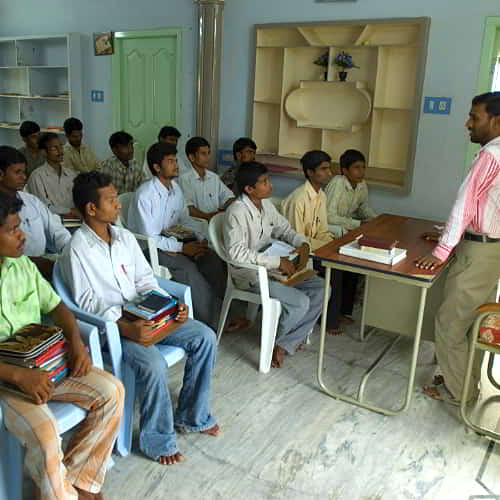
GFA’s national missionaries go through three years of intensive ministry training. This preparation equips them in Scripture, practical ministry skills, and cultural sensitivity for their specific contexts. They already live in the nations they serve, so they can move freely in restricted areas and are usually accepted into communities since they are not seen as outsiders. They understand local customs, speak the language fluently, and recognize how best to communicate hope without causing offense. They know the cultural taboos and the language, making them the perfect communicators to the people. Most of all, these national missionaries have a burden and passion to reach their own people with God’s love.[12] Through demonstrating Christ’s love in practical ways, these workers build trust and open doors for genuine spiritual conversations.
Practical Ministry and Community Impact
National missionaries serve by addressing immediate physical needs in their communities. They organize distributions of income-generating gifts like sewing machines or farm animals that help families establish sustainable livelihoods. They coordinate the installation of clean water wells that prevent waterborne diseases. They sponsor children through educational programs that break cycles of poverty.[13]
By meeting tangible needs, they reveal God’s care for the whole person—body and spirit. Families experience hope when clean water flows from a new well. Children discover dignity when education opens new possibilities. Communities witness transformation when compassionate service addresses their deepest struggles. Through these acts of love, people encounter the Gospel not merely as words but as demonstrated reality.
The Missionary Deployment Challenge
The scale of need within the 10/40 window far exceeds current mission efforts. Less than 3 percent of cross-cultural missionaries worldwide work among the region’s populations. This represents a severe imbalance when compared to the concentration of people who have yet to hear the Gospel. The disparity becomes even more striking when considering that approximately 90 percent of the world’s least reached people groups reside within the window’s boundaries.[14a]
Several factors contribute to this gap. Visa restrictions prevent many foreign workers from entering certain countries. Political instability creates security concerns that discourage long-term commitment. Language barriers and cultural complexity require extensive preparation before effective ministry can begin. Financial constraints limit the number of workers who can be supported adequately. These challenges, while significant, make the role of national missionaries even more crucial.
What distinguishes effective ministry in this context is cultural fluency combined with genuine compassion. Workers who understand local worldviews can communicate truth in ways that resonate rather than alienate. Those who demonstrate love through practical service earn credibility that mere words cannot achieve. This integration of cultural sensitivity and sacrificial care opens hearts that might otherwise remain closed to the Gospel message.
Around 80,000 people die daily in the 10/40 window, many of whom have never heard the Gospel.[14] This sobering reality underscores the urgency of supporting workers already on the ground. Consider joining GFA by sponsoring national missionaries working inside the 10/40 window, caring for people’s needs and displaying God’s love to those who need it the most. Your partnership helps equip these faithful servants to continue their vital ministry among the world’s least reached communities.
Learn more about what is the 10/40 window[1] Culbertson, Howard. “10/40 Window: We Need To Be Stirred to Action!” Southern Nazarene University. Accessed July 15, 2023. https://home.snu.edu/~hculbert/1040.htm.
[2] “10/40 Window.” Joshua Project. Accessed February 19, 2026. https://joshuaproject.net/resources/articles/10_40_window.
[3] “Unreached People Groups-In 10/40 Window.” Joshua Project. Accessed February 19, 2026. https://joshuaproject.net/unreached/7.
[4] Culbertson, Howard. “10/40 Window: We Need To Be Stirred to Action!” Southern Nazarene University. Accessed July 15, 2023. https://home.snu.edu/~hculbert/1040.htm.
[5] “10/40 Window: The Ultimate Guide.” Pray1040. Accessed February 19, 2026. https://pray1040.com/10-40-window/.
[6] Ibid.
[7a] “10/40 Window.” Joshua Project. Accessed February 19, 2026. https://joshuaproject.net/resources/articles/10_40_window.
[7] “10/40 Window: The Ultimate Guide.” Pray1040. Accessed February 19, 2026. https://pray1040.com/10-40-window/.
[8] Ibid.
[9] Ibid.
[10] “The 10/40 Window.” Window International Network. Accessed February 19, 2026. https://www.win1040.org/about-the-1040-window/.
[11] Culbertson, Howard. “10/40 Window: We Need To Be Stirred to Action!” Southern Nazarene University. Accessed July 15, 2023. https://home.snu.edu/~hculbert/1040.htm.
[12] “National Missionaries.” GFA World. Accessed July 15, 2023. https://www.gfa.org/sponsor/.
[13] “Why Sponsor a Child with GFA World?” GFA World. Accessed February 19, 2026. https://www.gfa.org/sponsorachild/why-sponsor/.
[14a] “Unreached People Groups – An Introduction.” Unreached Network. Accessed February 19, 2026. https://www.unreached.network/upg/.
[14] Culbertson, Howard. “10/40 Window: We Need To Be Stirred to Action!” Southern Nazarene University. Accessed July 15, 2023. https://home.snu.edu/~hculbert/1040.htm.