



Missionaries in Africa
Since 1979, GFA World has been faithfully serving “the least of these” in Asia. More recently, GFA was welcomed to begin ministry in Africa, steps have already been taken to be able to train missionaries in Africa to provide many of the same services to the impoverished—clean water, a child sponsorship program, community development and more.
Extreme poverty impacts many communities in Africa, and GFA aims to help families find hope as they break the cycle of poverty that has impacted them for generations.
Africa has one-fifth of the world’s population at 1.2 billion people. There are 54 countries and a vast range of people groups, cultures and terrains.[1] It’s a beautiful continent. Missionaries, organizations and local pastors have been working diligently to meet the areas of concern and fight poverty, all done in the name of Christ.
There are several common needs in Africa. Here are four primary ones:
- Health – Africa has some geographical obstacles to health and medical care. For example, in 2015 alone approximately 1.6 million Africans died of preventable diseases.[2] Health is a common need in Africa and one that can be improved upon with the efforts of missionaries and organizations.
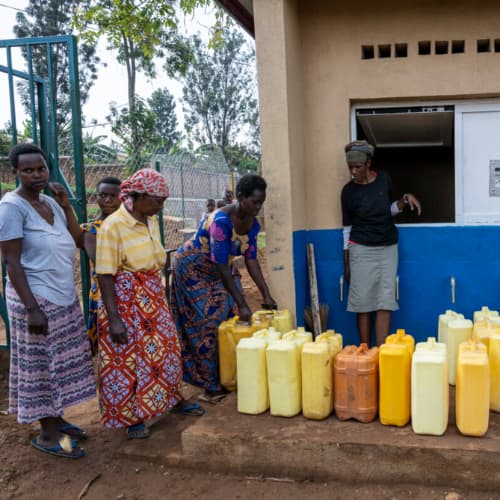
- Water – Africa is often known as the dry continent and there is a severe water crisis in many areas. More than a quarter of Africa’s population has no access to safe drinking water.[3] Missionaries in Africa are working to help bring clean water to villages and communities.
- Education – In sub-Saharan Africa, 32 million children do not go to school.[4] Poverty plays into this statistic because education is often exchanged for survival as families try to make ends meet. Christian missionaries in Africa are bringing solutions to the education crisis.
- Spiritual – Less than 2 percent of North Africa’s population knows the Lord.[5] Missionaries are working diligently to equip and train young church leaders to reach their communities with the Gospel of Jesus Christ.
GFA is now another organization with missionary involvement in Africa, bringing effective strategies to each of these primary areas:
- Health – GFA’s medical ministry has been effective in educating and treating health-related issues. By receiving vitamins and supplements, children are able to grow and develop into healthier kids. Prevention is an even better cure, so training is key. When treatment is needed, medical camps in remote areas bring skilled medical staff to those who might otherwise not be able to get medical care.
- Water – Clean water is essential to life and can bring hope to a hurting community. GFA has begun with clean water projects in Rwanda. By working with local contractors, the wells are cost effective to install. A local church oversees maintenance of the well and making sure that everyone is welcome to the clean pure water.

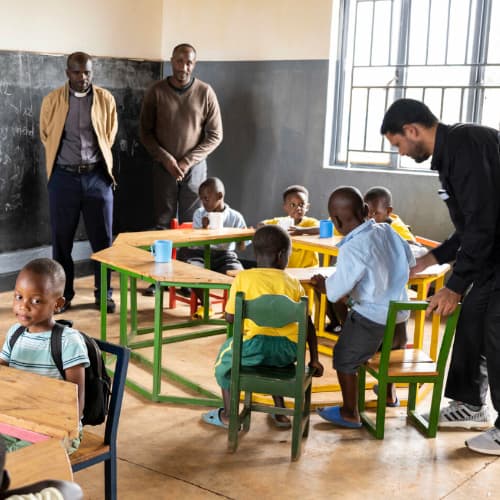
- Education – GFA is a frontrunner in poverty alleviation and one of our key strategies is keeping kids in school. Through a child sponsorship model, children receive helpful items like tuition assistance, school supplies and tutoring. They also receive nutritious food and hygiene supplies which relieve financial pressure from families. Children are more likely to stay in school when caring adults look out for them and remind them of the importance of education in breaking the cycle of poverty.
- Spiritual – GFA missionaries in Rwanda are working to open a ministry training center to train nationals to reach their own people. All the GFA initiatives in Africa seek to share the love and hope of God with the people. These national missionaries will be equipped to identify needs in their communities and determine the best solutions. Sometimes that solution will be a water well or an income-generating gift distribution. However, al this is done for the express purpose of being able to share the love of Christ with those who need Him.
Our aim is to help those in desperate need by breaking the cycle of poverty and setting lives free through the transforming power of the Gospel.
To begin in Africa, GFA has launched in Rwanda, and there are goals to expand into other countries as well. For now, ministry has begun in Kilgali, the capital city of Rwanda. Around 38% of the population in Rwanda live below the poverty line, so there is a significant need for help.[6] The country is a great choice to begin our ministry in Africa.
Will you join our missionary work in Africa as we seek to bring the good news to people in need? You can support the ministry by sponsoring a child in Rwanda. Your help can bring hope to a difficult situation, giving kids love and a brighter future. You can also support a GFA missionary. Together we can help those living in poverty to find help and hope.
Learn more about disaster relief organizations
[1] “World Population Prospects 2022: Summary of Results.” United Nations. https://www.un.org/development/desa/pd/sites/www.un.org.development.desa.pd/files/wpp2022_summary_of_results.pdf. Accessed November 17, 2022.
[2] “Dying from lack of medicines.” United Nations. www.un.org/africarenewal/magazine/december-2016-march-2017/dying-lack-medicines. March 2017.
[3] “Africa’s priorities for sustainable development.” United Nations. www.un.org/africarenewal/magazine/april-2012/africa%E2%80%99s-priorities-sustainable-development. April 2012.
[4] “GFA World: Showing God’s Love in Africa.” GFA World. https://www.gfa.org/africa. Accessed November 17, 2022.
[5] “GFA World: Showing God’s Love in Africa.” GFA World. https://www.gfa.org/africa. Accessed November 17, 2022.
[6] “Examining Poverty in Rwanda.” The Borgen Project. https://borgenproject.org/poverty-in-rwanda. Accessed November 18, 2022.