
Missionary Involvement in Africa – Who Are Some Notable People?
Missionary involvement in Africa has been instrumental in bringing the Gospel to the continent. The history of missionary activity in Africa saw significant expansion during the 19th century when missionaries ventured into Sub-Saharan Africa and beyond. Perhaps the two most famous Christian missionaries in African history are:
David Livingstone (1813-1873) who is perhaps that most notable missionary in the history of Africa. Christianity Today describes him as “Mother Teresa, Neil Armstrong, and Abraham Lincoln rolled into one.”[1] This was because of his unwearied effort to evangelize, explore the undiscovered and fight against slavery. Livingstone’s opposition to the slave trade became his defining mission, particularly targeting the Arab-Swahili trade in East Africa.[2] His motto, “Christianity, Commerce and Civilization,” reflected his belief that legitimate trade could end human trafficking. He is credited with developing a dangerous road into the interior of Africa to bring the Good News to unreached people.
In 1871, he witnessed around 400 Africans massacred by Arab slavers at Nyangwe market.[3] His vivid accounts, sent to Britain despite isolation and illness, stirred public outcry. Just months after his death in 1873, the Zanzibar slave market closed forever.[4] Through God’s grace, his sacrifice helped end one of history’s cruelest trades.
Mary Slessor (1848-1915) was the first solo woman missionary in Nigeria, arriving there in 1876.[5] She fought for the women and children in the villages who were being ruthlessly killed. She stood strong in the face of opposition and was able to share the love of Jesus in a remarkable way.
Slessor worked tirelessly to end the infanticide of twins, a practice stemming from beliefs that twins were cursed.[6] Over nearly four decades, she rescued and adopted dozens of abandoned children. Living among the Efik and Okoyong peoples, she learned their language and became known as the “white queen of Okoyong.”[7] Rather than remain in mission compounds, she lived in traditional houses, sharing daily life with those she served. This earned her trust and enabled her to share the gospel in deeply resonant ways.[8]
The transformation from external to indigenous leadership began during this period. While pioneers like Livingstone and Slessor blazed trails, they recognized that lasting change would come through African believers themselves. The 19th century saw African Christians emerge as the next generation of spiritual leaders.[9]
Missionaries faced staggering challenges on the mission field. Tropical diseases claimed many lives before quinine made survival more feasible. Yet they established schools, hospitals, and churches that became foundations for African communities. They began training local believers to continue the work, planting seeds of indigenous ministry that would flourish in decades to come.
Over the decades, Africans have stepped into leadership to reach their own people groups. Research shows that indigenous missionaries possess crucial advantages: fluency in local languages, deep cultural understanding, and established community relationships.[10] They navigate cultural complexities that external missionaries might miss.
For example, GFA World equips national missionaries to meet physical and spiritual needs in their own countries. As African nations gained independence from the 1950s onward, churches increasingly placed indigenous leaders in key positions.[11] This strengthened the church’s witness, as local believers shared Christ’s love in culturally relevant ways. National missionaries are being trained and equipped to reach the people with the Good News.
African mission agencies like CAPRO, sending missionaries since 1975, demonstrate the maturity of African Christianity.[12] These organizations provide training, member care, and strategic direction for effective service. God is raising up African leaders who will shape the future of global missions.
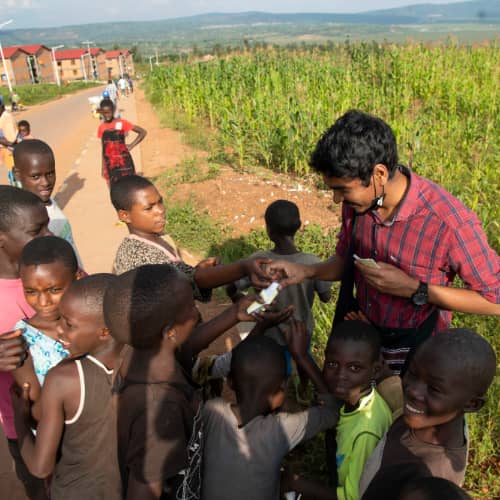
Church leaders and Rwandan officials have come together to bring children out of poverty in Kigali, Rwanda. Around 38% of Rwanda’s population lives below the poverty line.[13] Through our Child Sponsorship Program in the slums, children receive tangible help like nutritious food, school supplies and clean water. Our aim is to help those in desperate need. We do this by breaking the cycle of poverty and setting lives free through the transforming power of the Gospel.
GFA’s approach provides education, healthcare, and spiritual nurture, equipping children to envision futures beyond their circumstances. Each sponsored child receives personalized attention from staff who see them as beloved individuals. This reflects Christ’s heart for the vulnerable and creates pathways out of generational poverty.
“Everything we do focuses on bringing real hope and the love of God to those who’ve lost all hope, [so] we appreciate the open door we’ve been given to start saving lives and serving the poor in Rwanda,” K.P. Yohannan, the founder of GFA World, says.[14]
This vision extends beyond Rwanda to encompass the broader African continent. GFA’s ministry philosophy emphasizes partnership with local churches and leaders, recognizing that sustainable transformation comes from within communities. By equipping African believers to lead these initiatives, GFA ensures that programs remain culturally appropriate and spiritually grounded. The goal is not dependence, but empowerment—raising up African leaders who will carry this work forward for generations.
Will you pray for the work of GFA in Africa? Your prayers make a tangible difference in the lives of missionaries and the communities they serve. Pray for protection, wisdom, and divine appointments as they share Christ’s love daily. May God raise up faithful missionaries to reach their nations with the Gospel of Jesus Christ. Pray specifically for the children in our sponsorship programs, that they would know Jesus personally and grow into godly leaders. Pray for the effectiveness of their outreach and for God to call many more into His ministry. Ask the Lord to provide resources for wells, schools, and medical care that demonstrate His compassion. Join us in believing for transformation across Africa as hearts turn to the living God.
Learn more about missionaries in Africa[1] “David Livingstone.” Christianity Today. https://www.christianitytoday.com/history/people/missionaries/david-livingstone.html. Accessed November 17, 2022.
[2] “David Livingstone and the Other Slave Trade, Part I.” Smithsonian Libraries. https://blog.library.si.edu/blog/2013/09/30/david-livingstone-and-the-other-slave-trade-part-i/. Accessed January 31, 2026.
[3] “Livingstone in 1871.” Livingstone Online. https://livingstoneonline.org/spectral-imaging/livingstone-in-1871. Accessed January 31, 2026.
[4] “The Brave Stunt That Brought Down Slavery: How David Livingstone Freed East Africa.” Desiring God. https://www.desiringgod.org/articles/the-brave-stunt-that-brought-down-slavery. Accessed January 31, 2026.
[5] “Missionary Involvement in Nigeria (Historical & Current).” Bethany Global University. https://bethanygu.edu/missions/missionary-involvement-in-nigeria/. Accessed November 17, 2022.
[6] “Mary Slessor.” Wikipedia. https://en.wikipedia.org/wiki/Mary_Slessor. Accessed January 31, 2026.
[7] “Slessor, Mary (A).” Dictionary of African Christian Biography. https://dacb.org/stories/nigeria/slessor-mary/. Accessed January 31, 2026.
[8] “Who was Mary Slessor?” GotQuestions.org. https://www.gotquestions.org/Mary-Slessor.html. Accessed January 31, 2026.
[9] “Christian Missionary Activities in West Africa.” History Textbook. https://wasscehistorytextbook.com/6-christian-missionary-activities-in-west-africa/. Accessed January 31, 2026.
[10] “Indigenous Leadership in the Seventh-day Adventist Church in the West-Central Africa Division.” ESDA. https://encyclopedia.adventist.org/article?id=7H2U&highlight=y. Accessed January 31, 2026.
[11] “A Descriptive Chronicle of Transition from Mission to Indigenous Leadership.” Academia.edu. https://www.academia.edu/71629604/. Accessed January 31, 2026.
[12] “African missions agencies.” AfriGO. https://afrigo.org/articles/african-missions-agencies/. Accessed January 31, 2026.
[13] “Examining Poverty in Rwanda.” The Borgen Project. https://borgenproject.org/poverty-in-rwanda. Accessed November 18, 2022.
[14] “GFA World Launches First Missions in Africa.” GFA. https://gfanews.org/in-the-news/gfa-world-launches-first-missions-in-africa. April 29, 2021.