



GFA World: One of the Major Disaster Relief Organizations
Natural disasters happen all over the world, and no one knows when or where one might happen next. This is why disaster relief organizations are so important. Helping victims of earthquakes, floods and cyclones is important since their crops and houses have been wiped out, leaving already impoverished families with little hope for the future.

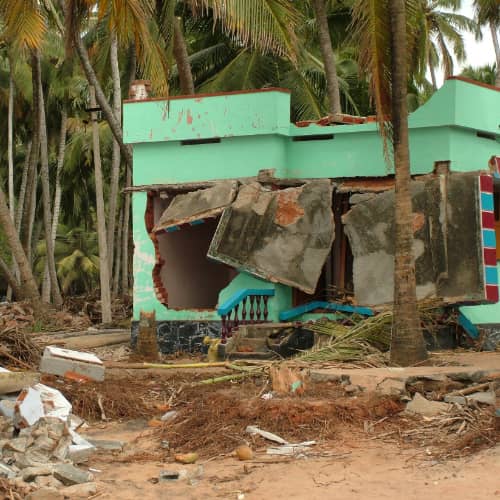
The death toll from natural disasters varies greatly from year to year, but on average, 45,000 people lose their lives each year. However, this number has been steadily decreasing in recent years. Historically, droughts and floods were the most deadly disasters, but this is no longer the case, and earthquakes have become the primary cause of disaster-related fatalities.[1]Sadly, these events affect those in poverty most heavily with many of the high death tolls centered in low-to-middle-income countries that don’t have the infrastructure to protect or respond to such events.[2]Even though the death rates are falling, the high impact on poor families proves that disaster relief organizations, like GFA World, are incredibly vital.
When it comes to disaster relief, volunteer work is one of the main methods for helping the victims. In September 2022, monsoon rains and flooding that began that June were continuing to spread over Pakistan, affecting more than three-fourths of all districts in the country. More than 1,500 people had died, and 33 million more had been affected.[3] Whole villages and farmlands were underwater; according to reports, one-third of the nation could be submerged before the water stopped.[4] GFA World’s compassion service teams were right there, working in Pakistan, delivering food, medicine, clothing and clean water to those affected.
GFA is focused on more than just temporary solutions for disaster relief; donations also allow us to offer long-term assistance. We work to rebuild homes, help families return their children to school, and provide income-generating gifts to help families get their life back on track after surviving a disaster.[5]
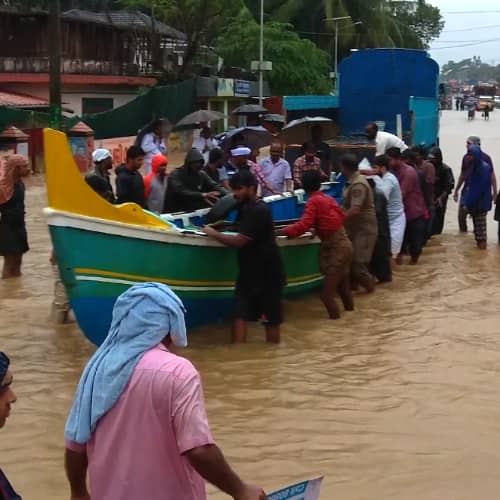
Dr. Daniel Johnson, director of the GFA medical ministry in Asia, talks about his experience rescuing people from similar flooding that happened in one country in South Asia in 2018. His rescue team also got stuck on a rooftop overnight as they were using a tractor to pick up stranded people from other roofs.
“You actually experienced that kind of feeling that, you know. If the rain doesn’t stop, how am I going to get out of this place? And it was actually really, really pouring out rain that night,” Dr. Johnson said. “If somebody doesn’t come to give me bread, give me water, give me something, how am I going to be here? I have no electricity. I can’t get in touch with my family. How scared would they be? So I think it hit home for me quite badly, which meant that we needed to just keep going on and on, trying to help people as far as we could.”[6]
Dr. Johnson also remembered a lady, who worked in the hospital, getting rescued from the flooding. One of the GFA missionaries hugged her, and she broke down crying; as Dr. Johnson said, “Sometimes, you don’t need to say much.”[7] Even little things like a hug make a world of difference to people who have lost everything.
For this particular disaster, people all over India got involved in the effort to help out. GFA pastors and their congregations, along with the Sisters of Compassion ministry, and students and staff from the schooling center raised funds and sent supplies to help those affected by the flooding.[8]
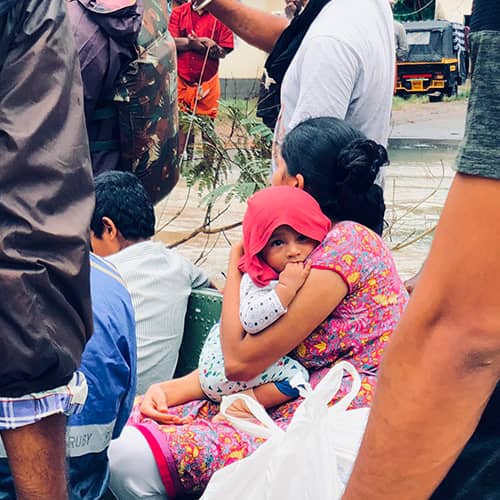
As one of the major faith based disaster relief organizations, GFA World is also focused on the spiritual needs of disaster victims. Our emergency relief efforts and long-term solutions are accompanied and bathed in prayer. We encourage others around the world to pray as well, asking specifically for prayers for the safety of our workers, prayers for the local authorities, prayers for comfort for the victims and other specific areas in disaster relief.[9]
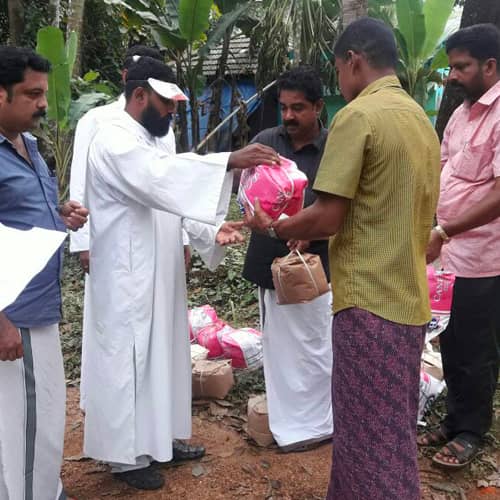
GFA works very hard in these disaster relief efforts. Our missionaries help with rescues in the midst of the disasters. These workers also give practical items like food, water, clothes and income-generating gifts to the victims; after the flooding in 2018, local officials asked GFA to step in and help with organizing relief materials. Three hundred and fifty volunteers packed relief kits for 14,000 families, which included rice, dal, masala powder, coconut oil, clothes, toothbrushes, toothpaste and soap.[10] GFA also gives long-term help to victims of disasters. We rebuild homes, put kids back in schools and give income-generating gifts.
Among disaster relief organizations, GFA World is perfectly positioned to be impactful when disasters strike. Consider donating to support our missionaries and relief workers who help to provide for the needs of the victims.
Learn more about women missionaries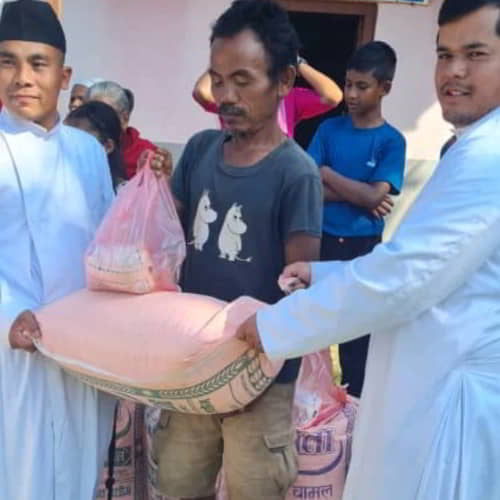
[1] Ritchie, Hannah & Roser, Max. “Natural Disasters.” Our World in Data. https://ourworldindata.org/natural-disasters. November 2021.
[2] Ibid.
[3] Goldbaum, Christina & ur-Rehman, Zia. “In Pakistan’s Record Floods, Villages Are Now Desperate Islands.” NY Times. https://www.nytimes.com/2022/09/14/world/asia/pakistan-floods.html. Accessed October 24, 2022.
[4] “Pakistan Floods 2022: Post-Disaster Needs Assessment.” The Government of Pakistan, Asian Development Bank, European Union, United Nations Development Programme, World Bank. https://thedocs.worldbank.org/en/doc/4a0114eb7d1cecbbbf2f65c5ce0789db-0310012022/original/Pakistan-Floods-2022-PDNA-Main-Report.pdf. October 2022.
[5] “Disaster Relief Work.” GFA World. https://www.gfa.org/compassion-services/disaster-flood-relief. Accessed October 24, 2022.
[6] “Firsthand Reflections of Flooding in Kerala, India.” GFA World. https://www.gfa.org/compassion-services/disaster-flood-relief/kerala-2018/#august-23. August 30, 2018.
[7] Ibid.
[8] “Bridge of Hope Students, Missionaries, Pastors, Locals Rally to Help Kerala.” GFA World. https://www.gfa.org/compassion-services/disaster-flood-relief/kerala-2018/#august-23. August 31, 2018.
[9] “Monthly Prayer Focus.” GFA World. https://www.gfa.org/pray/disaster-relief. Accessed October 24, 2022.
[10] “GFA-supported Workers Help Government Prepare, Sort Relief Kits for 14,000 Families.” GFA World. https://www.gfa.org/compassion-services/disaster-flood-relief/kerala-2018/#august-23. August 28, 2018.