



What Are Some Faith Based Disaster Relief Organizations?
There are many faith based disaster relief organizations, including recognizable names like the Salvation Army and The Southern Baptist Convention. Catholic Charities, another major player, responded to 59 new disasters in 2022 alone. Both organizations have large numbers of members and volunteers. Many christian disaster relief organizations rely on staff and volunteers who live in affected communities. GFA World is another organization that provides disaster relief. It stands out among other organizations because its work is accomplished through national missionaries. These missionaries live among the people they serve.

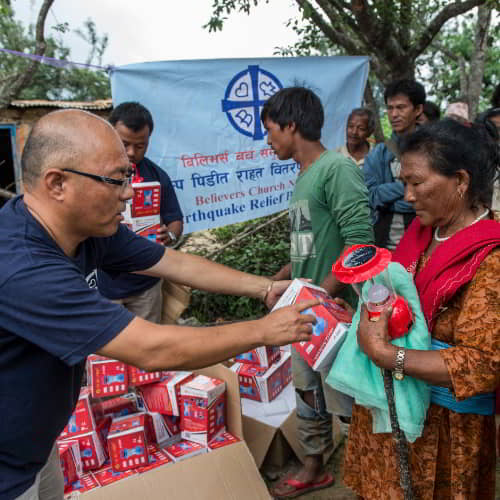
When disaster strikes, families often need help fast. The first days can feel overwhelming. According to UN humanitarian coordination data, the first 72 hours after a disaster are crucial for saving lives. A thoughtful disaster response may include safe shelter, clean water, and basic supplies. It may also plan for what comes next. Many faith based organizations try to support people through relief and recovery. This can help households move toward stability again. Some recovery guides describe a cycle with preparedness, relief, and recovery.[6]
It can also help to choose a group that will work with local leaders. Look for a team that will listen well and respond with care and humility. In many places, that means partnering with local communities and local authorities. That way, support fits the real needs on the ground. Some teams also encourage disaster preparedness before emergencies happen.
This can reduce stress for families later. In a crisis, clear communication and steady follow-through can strengthen recovery efforts over time.
GFA national missionaries are from the areas where they are serving. So they know the culture, people, and needs better than an outsider would.[1] This gives them a clear advantage. This cultural knowledge helps missionaries serve effectively during crisis moments. It helps make GFA’s ministry effective. The national missionaries are trained in poverty alleviation and disaster relief. They use solutions like education, vocational training, and income-generating gifts. These steps can help break the cycle of poverty.
In longer recoveries, support often needs structure. This helps families not get lost in the noise of a major crisis. Some communities use case management. This process helps disaster survivors connect with resources in an organized way. It helps survivors sort needs, set next steps, and connect with available support in an organized way.
Many teams also rely on trained disaster workers and volunteers. They know how to serve with care, avoid duplication, and stay consistent over time. This kind of steady support can help a community move toward long term recovery.[7]
These actions can give survivors hope for their futures.[2] Without help, a natural disaster can feel very disheartening. Disaster survivors often face physical losses alongside emotional trauma, making compassionate care essential. Research shows that psychological support during early recovery can reduce long-term mental health challenges.[10]
GFA missionaries worked hard to help earthquake survivors in Nepal after a 7.8 magnitude quake hit in May of 2015. A 7.3 aftershock followed. It was the worst disaster in the country’s history.[3] The earthquake killed nearly 9,000 people and injured more than 22,000 across the region.[11] Samita lost her father when their house collapsed on him in the earthquake. Their mother had left them ten years earlier. So the earthquake left Samita and her two siblings as orphans. They lived with their uncles.
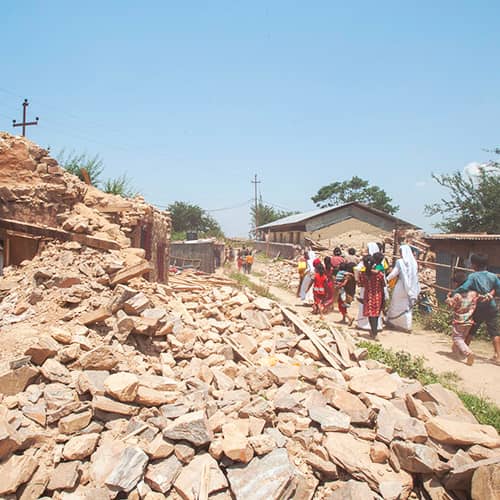
GFA missionaries asked Samita how they could help her. Her one request was clear and revealing: “Please help me study and go to school.”[4] With no one else to take care of her siblings, she would have to drop out of school. She would need to find a job. GFA has programs that help children avoid that sacrifice. Keeping children in school after disasters protects their futures and maintains stability during chaos.[12] Samita is just one of the thousands of kids who lost friends and family in the initial earthquake. Many others suffered loss during the hundreds of aftershocks.
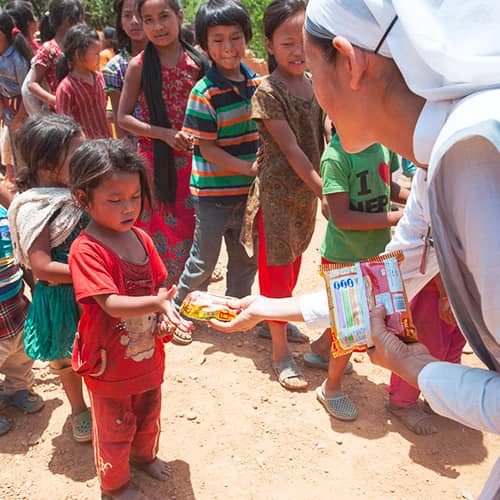
GFA workers were right there working with the traumatized kids. Four Sisters of Compassion spent time with them. They played games, gave them candy, and cared for them.[5]
After a disaster, needs are not only physical. Many people carry grief, fear, and deep questions about what happened. Trauma-aware support can include space for the emotional and spiritual side of recovery. This is especially important for children and families. Faith-based groups often provide comfort through prayer, presence, and practical help during overwhelming times.
Some disaster-serving groups describe spiritual care as support that respects each person, protects dignity, and avoids pressure—while offering compassionate presence in a time of loss.[8] Interfaith cooperation during disasters demonstrates unity and shared concern for hurting communities.[13] In large-scale events—like Hurricane Katrina—communities have also seen how recovery can take time and patience.[9]
GFA World has been on the scene for these and many more disasters. The organization serves communities across Asia affected by earthquakes, floods, and cyclones. It provides immediate emergency relief and long-term solutions that help lead people out of the crisis. This can give victims hope for their earthly futures and eternal ones too. Consider helping these efforts by donating to GFA and joining others in prayer for disaster relief work.
Learn more about GFA and disaster relief organizations
[1] “National Missionaries.” GFA World. https://www.gfa.org/sponsor/why-national-missionaries. Accessed October 26, 2022.
[2] “Disaster Relief Work.” GFA World. https://www.gfa.org/compassion-services/disaster-flood-relief. Accessed October 26, 2022.
[3] “Nepal Earthquake: One Year Later.” GFA World. https://www.gfa.org/earthquake/nepal/. Accessed October 26, 2022.
[4] “Children Affected by the Nepal Earthquakes.” GFA World. https://www.gfa.org/nepal/children-of-nepal/. May 2016.
[5] Ibid.
[6] National Voluntary Organizations Active in Disaster (National VOAD), “Long-Term Recovery Guide.” May 2023. https://www.nvoad.org/wp-content/uploads/National-VOAD-LTR-Guide-2023.pdf.
[7] Center for Disaster Philanthropy. “Disaster Case Management: An overview and recommendations for implementation and support.” December 2022. https://disasterphilanthropy.org/wp-content/uploads/2022/12/2022_11-ERF-Disaster-Case-Management.pdf.
[8] National VOAD Emotional and Spiritual Care Committee. “Disaster Spiritual Care Guidelines.” 2014. https://www.nvoad.org/wp-content/uploads/national_voad_disaster_spiritual_care_guidelines__final.pdf.
[9] “Hurricane Katrina.” Encyclopedia Britannica. July 17, 2008. https://www.britannica.com/event/Hurricane-Katrina.
[10] “5 Essentials for the First 72 Hours of Disaster Response.” United Nations OCHA. https://www.unocha.org/publications/report/world/5-essentials-first-72-hours-disaster-response. Accessed January 29, 2026.
[11] “Nepal Earthquake.” Encyclopedia Britannica. https://www.britannica.com/event/Nepal-earthquake-of-2015. Accessed January 29, 2026.
[12] “Disaster Relief – Catholic Charities USA.” Catholic Charities USA. https://www.catholiccharitiesusa.org/what-we-do/disaster-relief/. Accessed January 29, 2026.
[13] Ibid.