Disaster Relief Organizations

What Is a Disaster Relief Volunteer?

A disaster relief volunteer is someone moved by compassion. They help people affected by natural disasters around the world. GFA World is made up of people who fully embody this description. We work alongside communities and local partners in times of crisis. According to disaster resilience research, volunteers play a critical role in strengthening community bonds and promoting recovery beyond immediate relief efforts.

What disaster volunteering can look like

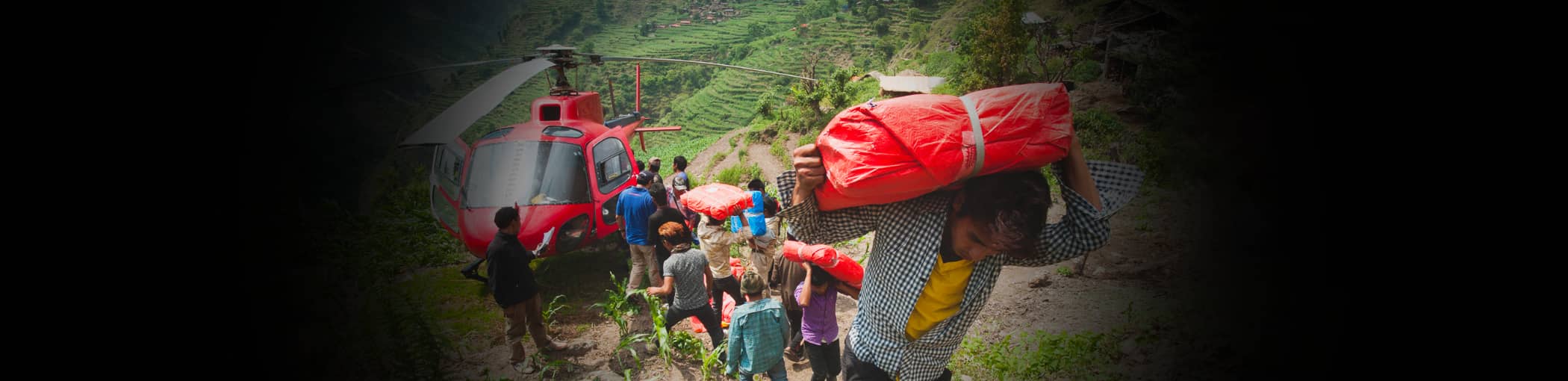
When disasters strike, people often want to help right away. That desire is good. It works best with clear roles, good training, and steady teamwork.[6] Studies show that well-coordinated volunteers contribute more effectively when integrated into structured response systems.

In the first days, a well-coordinated disaster response may include sorting supplies, preparing food, checking on neighbors, or supporting safe, temporary shelter.[7] A response volunteer may do simple, practical tasks that free trained teams to focus on urgent needs.[6] Beyond physical tasks, psychological first aid training helps volunteers provide emotional support to survivors experiencing distress.

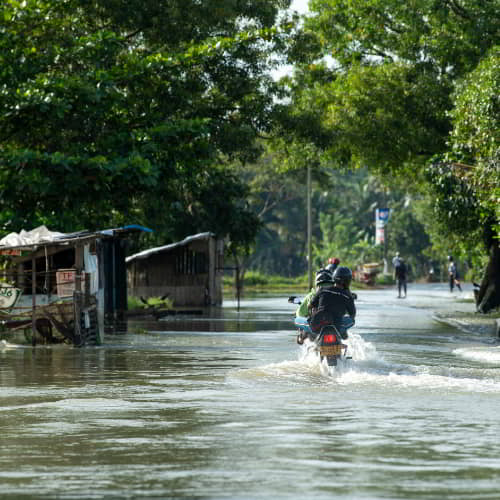
Volunteers may also serve after the water goes down or roads reopen. For example, after storms such as hurricane helene, communities can still need help with cleanup and daily basics. In any impacted area, it’s wise to follow local direction and avoid stepping into unsafe work.[7] Research shows that effective volunteers match their skills to clear tasks and receive proper safety guidance.[6] This helps your time and energy bring real comfort, not added strain.

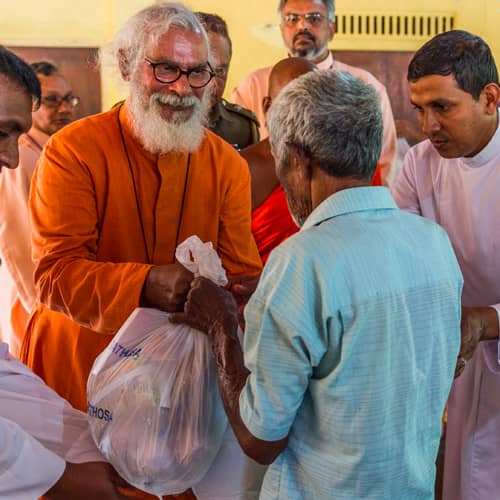
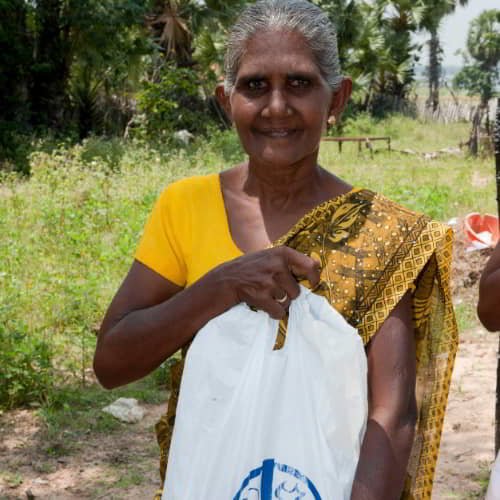
During extreme flooding in Sri Lanka in 2017, GFA’s founder, K.P. Yohannan (Metropolitan Yohan), delivered supplies to the families affected by the floods and resulting landslides. He and other GFA missionaries collaborated with religious leaders from a Buddhist monastery. Interfaith partnerships in disaster response help build trust and ensure that support reaches diverse communities with cultural sensitivity. Their combined efforts provided 250 families with dry ration kits. These kits contained food and supplies to sustain them as they got back on their feet.

“In all these situations, there was one question the local people kept asking us: ‘Why are we doing this?’ Our answer always remains the same: It is because of the love of Christ,” Yohannan said.[1]

This was a powerful witness of God to the Buddhists. They were impressed that GFA was willing to jump in and help. This showed how God’s love can cross cultural boundaries.

“This is the first time a Christian religious leader has comes [here],” the Buddhist leader of the monastery said, “[They have] helped the really needy people of our village who greatly suffered due to the flood crisis in this area. This shows that there is no division of race, cast or religion, and everyone can join together as one to help.”[2]

Even though our churches and pastors were being threatened by the flooding themselves, GFA was still working to help those around them in Sri Lanka. Local leadership during crises enables faster response because community members understand unique needs and can coordinate more effectively. One GFA missionary, Vidu, reported, “Nobody can think of anything else other than going to safe places.”[3] Despite that, GFA was already making plans to clean up and help the survivors after the flood waters receded.
How support continues after the crisis moment

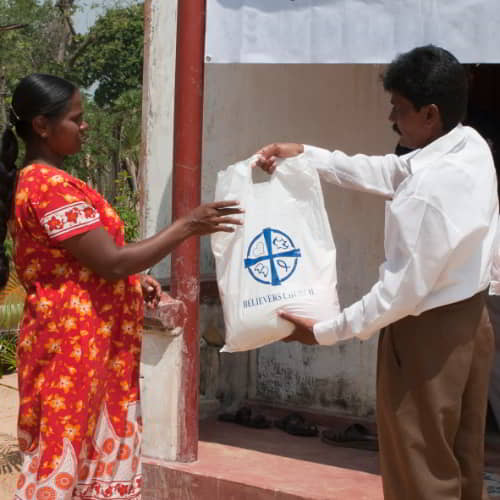
Relief work often has layers. Some help must happen fast. Other help takes time. That later season can include recovery operations like cleaning up, restoring safe living spaces, and helping families return to routines. Long-term recovery frameworks emphasize the transition from emergency response to rebuilding systems and supporting community resilience. It also includes steady care during long-term recovery, when needs can be less visible but still heavy.[8]

Many teams also serve through an established voluntary organization that can coordinate people, supplies, and schedules.[6] Community-led approaches recognize that local people are best positioned to identify their needs and drive sustainable recovery efforts. That coordination helps protect both survivors and volunteers, especially when emotions are high and resources are limited.[7]

Our missionaries are some of the frontline workers when it comes to natural disasters. Our volunteers not only provide immediate relief in the wake of disasters. We continue investing in families and communities long after the devastation. Sustainable recovery efforts help communities rebuild in ways that strengthen resilience and reduce future vulnerability. GFA works for long-term solutions by helping rebuild homes, ensuring children get back to school and providing income-generating gifts to the most affected families.

That combination matters. Immediate help meets urgent needs. Ongoing help supports stable rebuilding and emotional strength.[7] It also helps families move from survival to renewed daily life, one step at a time.

This helps families get back on their feet. These steps help break the cycle of poverty, which natural disasters make even more inescapable. According to the World Bank, natural disasters force 26 million people into poverty every year and cost $520 billion in losses.

These events tend to affect the poorest countries of the world the most dramatically. Research shows that poor people are more vulnerable because they live in fragile housing, work in sectors susceptible to extreme weather, and receive less support for recovery. They have little infrastructure in place to respond to or prevent them. So, GFA’s poverty-combatting measures are even more vital.

Practical next steps:

  • Choose a role that fits your skills and limits, and be honest about what you can do.[6]
  • Ask what safety steps and basic gear are expected before you arrive.[7]
  • Serve with patience. Some of the most meaningful help happens after the headlines fade.[8]
  • Treat every person you meet with respect, care, and privacy.[6]
  • Consider training in psychological first aid to better support survivors’ emotional and mental health needs.

Consider joining GFA’s efforts to address the impact of natural disasters on the impoverished of the world. Even something small can make a huge difference for these people who have lost everything. Your support helps provide both urgent relief and long-term recovery assistance that breaks cycles of poverty.

If volunteering is not possible right now, prayer and giving can still support steady care for families over time. Disaster case management helps survivors navigate complex recovery processes and connect with resources for sustainable rebuilding. Also, please pray for ongoing relief efforts and those involved. Prayer provides strength and encouragement to workers serving in difficult conditions and families rebuilding their lives.

Learn more about GFA and disaster relief organizations
[1] “GFA Founder Visits Monastery to Provide Flood Relief Supplies.” GFA World. https://www.gfa.org/compassion-services/disaster-flood-relief/srilanka/. September 7, 2017.
[2] Ibid.
[3] “Relief Workers Wait Anxiously While Death Toll Climbs in Sri Lanka Flooding.” GFA World. https://www.gfa.org/compassion-services/disaster-flood-relief/srilanka/. May 30, 2017.
[6] National Voluntary Organizations Active in Disaster (National VOAD). “Volunteer Management: Points of Consensus.” May 2024. https://www.nvoad.org/wp-content/uploads/NVOAD-Volunteer-Management-POC_Final-Ratified-May-2024.pdf.
[7] International Federation of Red Cross and Red Crescent Societies (IFRC). “Standards to Facilitate the Safety, Security and Well-Being of Volunteers: Implementation Guide.” October 2021. https://www.ifrc.org/sites/default/files/2023-04/2021-10-18_SSW_Imp_guide_EN_V1.pdf.
[8] Ritchie, Hannah & Roser, Max. “Natural Disasters.” Our World in Data. https://ourworldindata.org/natural-disasters. November 2021.