
Women Missionaries

Women Missionaries: A Gift to the Hurting

Women missionaries often serve through steady presence—listening, caring, and showing respect in everyday moments. Their work can be quiet, but it can also be deeply life-giving when someone feels forgotten.

The woman’s missionary movement in the mid-19th and early 20th centuries involved more than two million Protestant American women. These women supported and participated in international missions. This movement added thousands of single female missionaries to the global mission force. They served with courage and dedication.

The United Nations lists women and girls as one of the most vulnerable people groups of people in the world. That’s half of the planet’s population. Deep social and cultural prejudices and practices hurt them. That’s why women missionaries are so greatly needed in the world today.

“These are often among the most vulnerable members of society, and are at greater risk of economic hardship, exclusion and violence; discrimination against them is often compounded,” the UN reports.[1] In daily life, this can look like limited choices, unsafe work, or a lack of support when sickness or injury comes.

Across the globe:

  • 380 million women and girls live in extreme poverty, with an income of $1.90 per day or less.
  • One in three women in 2021 lived with moderate to severe food insecurity.[2]
  • Of all human trafficking victims, 72 percent are women and girls.[3]

Numbers can feel distant until you picture a real face, a real home, and a real story behind them.

These staggering and heartbreaking statistics show the hurts and fears that millions of women face every single day. Women missionaries can go into these places as friendly faces of God. They can understand the fragile situations many women and girls live with.

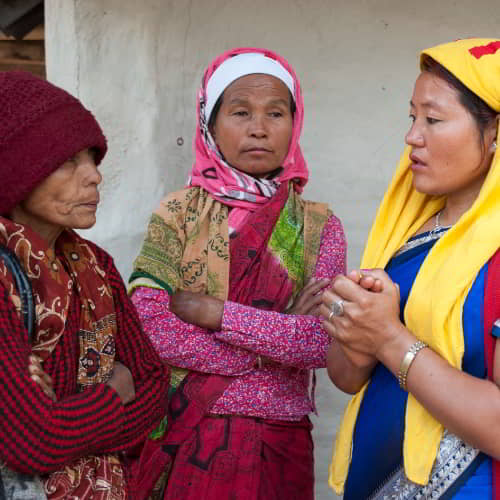
Even small acts—like a safe visit, a shared meal, or help with a basic task—can remind someone she is seen. In many communities, a single female missionary can sit with a woman, hear her story, and offer simple help in a way that respects local customs.

According to Pioneers, about two-thirds of missionaries today are married couples. Of the remaining third, between 70 and 80 percent are single women. This means women make up the majority of the global mission field workforce.

The total number of active missionaries is difficult to know. People move often, and “missionary” can be defined in different ways. The International Bulletin of Mission Research estimates that 430,000 missionaries went out into the world from every Christian tradition in 2021. Historically, there have been more women in missions than men, including both married couples and single women.[4] Because definitions vary, it may help to focus on what stays the same: faithful service, patient relationships, and consistent care.

Historical records show that women missionaries outnumbered men as early as the 19th century. In studies from the early 1900s, researchers found that women made up 57 to 64 percent of foreign missionaries. This pattern has continued. Today, 70 to 80 percent of single missionaries are women.

Women are well suited for missionary service. They can enter places men cannot reach. They can care for hurts that men may not fully understand. Since many of the most vulnerable are women, this vital role of women in mission work deserves priority.

In many cultures, women live in secluded spaces where men cannot visit. Early missionaries recognized this reality. They organized mission boards specifically to send women. These women could reach “secluded women” in ways that male missionaries could not. This pattern continues today in many parts of the world.

In a given mission field, trust is often built one conversation at a time—and women may have unique access to women’s spaces where stories are shared. Wise care also means moving slowly, asking permission, and protecting privacy.

Christian missionaries in South Asia have benefited from the legacy of Christian women like Mother Teresa and Amy Carmichael. These two women responded to God’s call and chose lifelong missionary service in the countries where they served. That legacy continues whenever a woman steps toward someone else’s pain with courage and gentleness.

Another example is Gladys Aylward, a British Christian woman who followed God’s leading to China. There, she became known for caring for children and other vulnerable people during years of hardship and conflict. Their Christian missionary work encourages future generations to serve the Lord. It also inspires them to keep sharing the Good News among those who are hurting.[5] For many readers, these stories also show that love can look like staying present when life is unstable.

Throughout history, women have shaped the missionary movement in profound ways. After the Civil War in the United States, many women organized mission boards. Women served as officers in local societies. They led monthly missions meetings. They raised awareness of needs overseas. National leaders gained business and ministry skills. They appointed and sent missionaries. They published magazines and managed donations.

By the turn of the 20th century, at least 40 women’s missionary societies existed. These involved two million female mission workers. Women gained leadership roles that had not existed decades earlier.

Across the wider missionary movement, readers often remember women such as Mary Slessor, Ann Judson, Elisabeth Elliot, and Lottie Moon. History has also held hard seasons—disease, displacement, and wars like World War II—when steady care mattered even more. Stories shared across the United States have sometimes helped people pray, give, and care for long-term service beyond their own communities. Lottie Moon, remembered as a Southern Baptist missionary, is one example of someone whose letters urged practical support for mission work.[6]

Mary Slessor served in West Africa for over 40 years. She worked to end harmful practices and shared the Good News in Nigeria. She learned local languages and gained trust. Ann Judson was one of the first American women to serve overseas as a missionary. She partnered with her husband in difficult conditions. Their work opened doors for future generations.

Elisabeth Elliot is known for her courage and forgiveness. After her husband was killed, she returned to serve the same people. She showed Christ’s love through her actions. Lottie Moon served in China for 40 years. She advocated for women in missions. Her legacy continues today through the annual Christmas offering named in her honor.

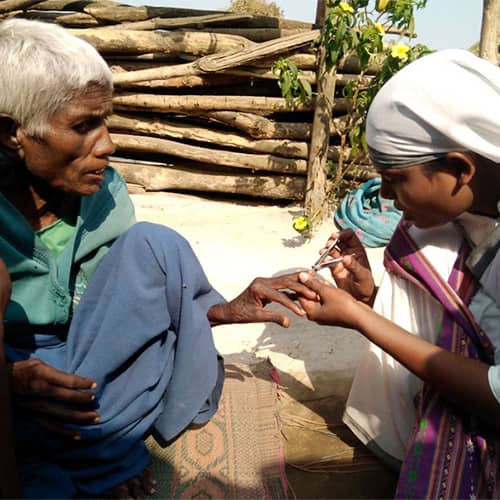
Widows in South Asia can find themselves in some of the worst conditions possible. They work as long as they can, but age, hard labor and injury can weaken them quickly. Then they must rely on family members, who may or may not be willing or able to help. When support disappears, everyday needs can become heavy—and loneliness can settle in. Consistent visits can help restore hope and a sense of belonging.

Adey is one such woman. At 60, she was still working in the fields until a bad fall left her unable to stand. Then she was injured and alone until a daughter could come and care for her.[7] When someone loses mobility, simple tasks like bathing, cooking, or walking to the door can suddenly feel impossible.

Soon she and other widows in the area were visited by GFA World Sisters of Compassion and Women’s Fellowship members. The workers saw the condition of women like Adey and were deeply moved by their suffering. They offered care in a way that treated each person as more than a problem to solve.

Adey’s fall left her with severe pain in her legs and hands. The Sisters used oils to gently massage her limbs. They helped relieve some of her pain and showed her the care of Jesus Christ. Comfort can be deeply personal, so gentle touch works best when it is offered with respect and consent.

“I thank God for the Sisters of Compassion team and your ministry,” Adey said. “No one has ever come to know my well-being, but these sisters came and cut my hair, gave me a bath, and massaged my hands and legs. I am truly thankful to them.”

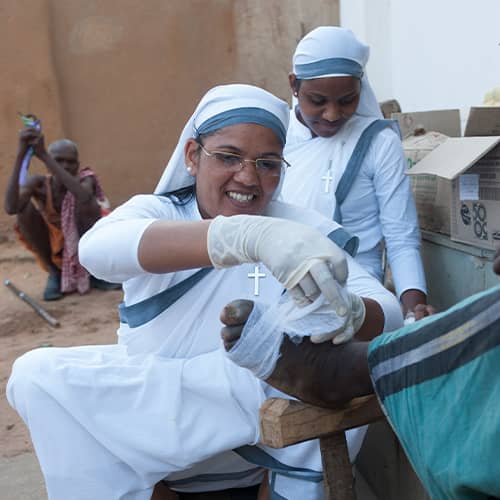
This kind of tender physical care is best given by female missionaries like the Sisters of Compassion or the Women’s Fellowship members. It shows the gentle mercies of Jesus Christ through His female disciples. It can also help someone feel safe when she is weak, hurting, or embarrassed.

The women’s ministry team is also thankful when they get to serve in these special ways. Many workers describe service as a privilege because it lets them honor people who are often overlooked.

“I thank God for this privilege that I could do something for the needy people,” Sani, one of the workers, said. “When I see these old mothers and fathers whose children have left them alone to struggle, my heart breaks.”

Women in missions today continue a long heritage of service and sacrifice. From the 19th century onward, women have left homes and families to share Christ’s love. They have served in difficult places with courage and faith. Their example inspires new generations to answer God’s call.

Supporting a missionary charity like GFA World makes it possible for these beautiful women to go to those who need them most. GFA trains national missionaries to serve in their own country. They are uniquely qualified, both culturally and socially, to understand those they serve and the situations they will face. Local service can reduce barriers, because shared language and shared life experience help people feel understood.

Before knowing Jesus, many of these women experienced the same shame, fear, abuse, rejection and heartache their neighboring women live with. In their culture, it is difficult to freely interact with men. Because these missionaries are women, they can approach women in their homes. They can freely share about Jesus’ love with less fear of misunderstandings. Often, trust begins with listening first—then offering encouragement, prayer, and practical help as the relationship grows.

Women missionaries face unique challenges on the mission field. In many cultures, unmarried women are uncommon. Yet according to recent reports, single women continue to answer the call. They build community through local friendships. They find support through prayer and partnership. God provides what they need to serve faithfully.

Sponsoring one woman through GFA to be a missionary makes it possible for:

  • gender barriers to be overcome so women in Asia can hear about new life in Christ. Support can also help a missionary keep returning, so relationships have time to deepen.
  • women in all walks of life to be served, whether widows, mothers or young adults. Care often starts with a simple question: “How can I help today?”
  • women to be ministered to in communities such as villages, slums and leprosy colonies that have never had the chance to hear about hope found in Jesus. In places where people feel pushed aside, a caring presence can bring dignity and relief.

Make today the day you change not only the missionary’s life but also the lives of those she will touch. Sponsor her for just $45 a month and help her be the hands and feet of Jesus to those least cared for. A steady monthly gift can help a missionary plan visits and continue care over time.

Learn more about how to sponsor a girl education

[1] “Women.” United Nations (Fight Racism: Vulnerable Groups). Accessed January 16, 2026. https://www.un.org/en/fight-racism/vulnerable-groups/women
[2] UN Women and United Nations Department of Economic and Social Affairs, Statistics Division. “Progress on the Sustainable Development Goals: The Gender Snapshot 2022.” 2022. Accessed January 16, 2026. https://unstats.un.org/sdgs/gender-snapshot/2022/GenderSnapshot.pdf
[3] ECPAT International. “How Does Trafficking Affect Women, Girls and Children?” Accessed January 16, 2026. https://ecpat.org/story/international-women-and-girls-series-5-how-does-trafficking-affect-women-girls-and-children/
[4] Center for the Study of Global Christianity, Gordon-Conwell Theological Seminary. “Status of Global Christianity, 2021, in the Context of 1900.” 2021. Accessed January 16, 2026. https://www.gordonconwell.edu/center-for-global-christianity/wp-content/uploads/sites/13/2020/12/Status-of-Global-Christianity-2021.pdf
[5] “Gladys Aylward.” Wikipedia. Accessed January 16, 2026. https://en.wikipedia.org/wiki/Gladys_Aylward
[6] British Museum. “Mary Slessor.” Accessed January 16, 2026. https://www.britishmuseum.org/collection/term/BIOG184600; “Judson, Ann Hasseltine.” Encyclopedia.com. Accessed January 16, 2026. https://www.encyclopedia.com/people/philosophy-and-religion/protestant-christianity-biographies/ann-hasseltine-judson; Elisabeth Elliot Foundation. “About.” Accessed January 16, 2026. https://elisabethelliot.org/about/; International Mission Board. “Who Was Lottie Moon?” Accessed January 16, 2026. https://www.imb.org/about/lottie-moon/
[7] GFA World. Photo. Facebook. September 17, 2022. Accessed January 16, 2026. https://www.facebook.com/photo/?fbid=465700542269319&set=pb.100066339347034.-2207520000