
Women Missionaries

What Should I Look for in a Missionary Charity?

Choosing a charity can feel personal, because it connects your values to real people and real needs. Research shows that nearly all donors feel motivated when they connect emotionally to a cause. This personal connection helps explain why people give. This guide is meant to help you ask clear, practical questions—without pressure or confusion.

We all want to know we are supporting a missionary charity that keeps its mission central. Strong organizations demonstrate this through consistent messaging and measurable outcomes year after year. They share stories that show real impact in people’s lives. In everyday terms, that often means the organization can clearly explain who it serves, how it serves, and why it serves—then follow through with steady, respectful care.

It delivers on its message, especially when it comes to addressing poverty in Jesus’ name. Around the world, people living in extreme poverty often face hunger, unsafe housing and limited opportunity. For many families, extreme poverty can mean constant tradeoffs—food or medicine, rent or school supplies, rest or one more shift of work.

These daily pressures can strain health and emotional wellbeing over time. Families may worry about their children’s future and feel isolated from community support. Chronic stress from poverty affects both physical and mental health.

International reports estimate that roughly one in ten people still live in these conditions.[1]

When you give through a missionary charity that is serving the poor, you help local workers come alongside families living in poverty—including those who have been affected by floods, storms and other natural disasters—with care that honors their dignity.

Dignity-centered approaches recognize each person’s inherent worth and decision-making capacity. This means asking what families need rather than assuming. It means respecting their knowledge of their own situation and working together toward solutions.

This care points them toward lasting hope. A healthy approach also protects dignity by listening first, offering help freely, and respecting a person’s choices.

Before selecting any organization, it helps to verify basic accountability markers. Simple online checks can reveal whether an organization operates with transparency and follows ethical standards. Charity Navigator offers these tips:[2]

  • If you can’t find their Employer Identification Number (EIN) as a 501(c)(3) organization, do not donate. You can search for an EIN at IRS.gov through its Tax Exempt Organization Search (TEOS) tool. Using the IRS search can help you confirm basic tax-exempt information before you give.[3]
  • Look for proof on the organization’s website that its goals and mission are being met in real ways. This can be found in real-life stories and in year-end reports.
  • Also look for clear communication practices—like how donor privacy is handled, how questions are answered, and whether stories are shared with care.

A simple way to spot strong accountability is to look for clear governance, financial transparency, results reporting, and honest communication.[4] Transparent organizations typically publish annual reports and financial statements that show how funds are allocated toward program work. Look for charities that dedicate a high percentage of donations directly to programs rather than overhead costs.

Once you have confirmed that an organization is an approved tax-exempt nonprofit and actively fulfilling its purpose, you can take the next step. Look more closely at how that missionary charity serves people living in poverty. Review their impact reports to understand both short-term relief and long-term development efforts. Strong organizations explain how immediate aid connects to sustainable change over months and years. Pay attention to whether the language feels respectful and people-first, not transactional or pushy.

Helpful questions to ask as you compare charities:

  • Do they describe people with dignity—without labels that shame or stereotype?
  • Do they explain what “help” looks like over time, not only in a single moment?
  • Do they show consistency (ongoing care), not just crisis response?
  • Do they communicate with humility—crediting God’s work rather than marketing themselves?
  • Do they make it clear that care is offered freely, without strings attached?
  • Do they provide transparent updates on how donor contributions create measurable change?
  • Do they protect the privacy and safety of the people they serve in their communications?

Many Christian women and men serve in practical and spiritual ways through Bible studies, prayer and simple acts of kindness. These acts match local needs and respect local culture. In some communities, this work extends to abandoned children who need safe adults and consistent support. These vulnerable children often face risks including exploitation, hunger, and lack of education without stable care.

Healthy service also moves at the speed of trust—asking permission, honoring privacy, and avoiding anything that could feel coercive. Look for stories of people who were among those with the fewest resources. They have seen their daily lives change through practical help, community support and the love of Jesus Christ.

In some communities, care may focus on women, older neighbors, and abandoned children who need steady support and safe adults around them. Community-based approaches often address multiple needs at once—providing food security, healthcare access, and social connection in coordinated ways. When support systems work together, families can access help more easily and build stronger foundations for lasting change.

When we choose to support a missionary, we see their heart for serving the poor and walking with people in hard circumstances. This includes communities that have yet to hear much about Christ’s love. Supporting a GFA World–trained missionary, especially a woman, is a way to love the body of Christ.

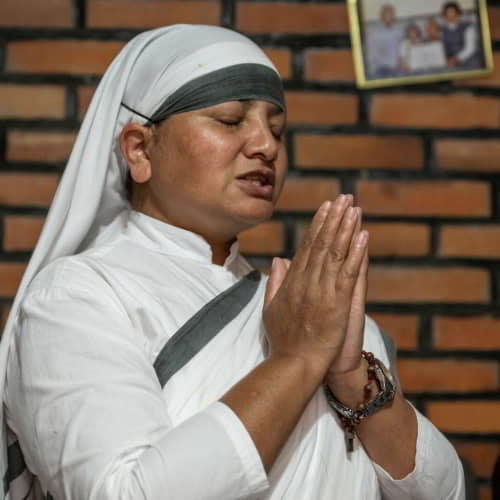
It is also a way to stand with those who are reaching out in humility, bringing hope and offering prayer and compassion as God leads them. Long-term missionary presence allows relationships to deepen and trust to grow through consistent care. Over months and years, faithful service opens doors for deeper conversations about faith and hope.

What matters most is faithfulness—showing up again and again with kindness, patience, and respect. Some readers think of Mother Teresa when they picture a life shaped by steady compassion and humble service.[5]

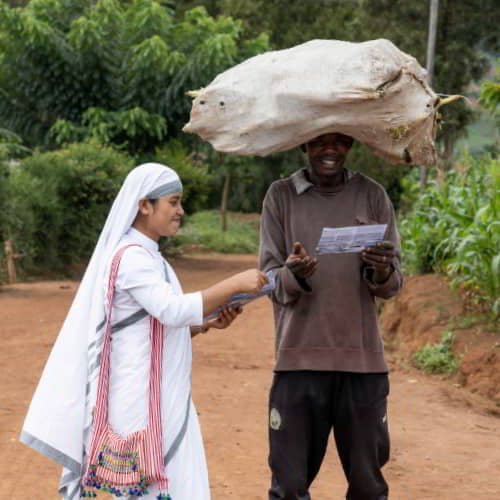
Just $45 a month—the cost of a few cups of coffee—helps her continue vital work in some of the most difficult settings. Many people are living in poverty and daily struggle to meet basic needs. Day after day she visits homes, listens to stories of hardship and quietly serves the poor with prayer, encouragement and practical help.

In some regions, families have also been affected by natural disasters. A faithful missionary can be a steady, hope-filled presence as they rebuild their lives. Your monthly commitment provides reliable support that enables her to plan visits and maintain relationships over months and years. Consistency matters, because steady care often helps a family feel less alone and more supported over time.

As she serves the poor, she also gently speaks about God’s love in Jesus when welcomed. She always offers care freely and trusts Him to work in each heart. You may be called to support her in this beautiful, tender work. She can keep serving the poor, standing with people living in extreme poverty and reflecting Christ’s compassion through patient, everyday care. Choose a female GFA missionary today to love with your gift and to partner in this ongoing ministry of mercy.

Learn more about women missionaries

[1] “Poverty: Overview.” World Bank. https://www.worldbank.org/en/topic/poverty/overview. Accessed January 18, 2026.
[2] “Avoiding Charity Scams.” Charity Navigator. https://www.charitynavigator.org/donor-basics/protect-your-giving/avoid-charity-scams/. Accessed January 18, 2026.
[3] “Tax Exempt Organization Search.” Internal Revenue Service. https://www.irs.gov/charities-non-profits/tax-exempt-organization-search. Page last reviewed or updated August 20, 2025. Accessed January 18, 2026.
[4] BBB Wise Giving Alliance. “BBB Standards for Charity Accountability.” Give.org. https://give.org/charity-landing-page/bbb-standards-for-charity-accountability. Accessed January 18, 2026.
[5] “Why Giving to the Poor Is Actually Giving to God.” Stewardship. https://www.stewardship.org.uk/blogs/giving-to-the-poor. Accessed January 18, 2026.
[6] “Understanding Donor Behavior: Insights for Increasing Engagement and Charitable Giving.” Yale School of Management. https://som.yale.edu/story/2024/understanding-donor-behavior-insights-increasing-engagement-and-charitable-giving. August 14, 2024. Accessed January 27, 2026.
[7] Vogels, Emily A. “What Motivates U.S. and U.K. Donors to Give.” CAF America. https://cafamerica.org/blog/what-motivates-u-s-and-u-k-donors-to-give/. September 17, 2025. Accessed January 27, 2026.
[8] “Orphaned or Abandoned Children.” Food For The Poor. https://foodforthepoor.org/our-work/problems-we-solve/orphaned-and-abandoned-children/. August 14, 2024. Accessed January 27, 2026.