
How Can Christian Missionary Work Be Most Effective?
Over time, the definition and strategies for Christian missionary work have changed. In the past, a person or couple would dedicate a lifetime to their chosen mission field. In more recent decades, there has been an increase in short-term missions and church-organized mission trip opportunities for youth and adults. According to Simpson University research, over 1.6 million Americans participated annually in short-term missions by the early 2000s. These trips can help people see God’s global mission more clearly. Short-term teams often learn most when they listen first, work with local believers, and serve with humility. When planning a trip, it helps to ask what will still be strengthened after the visitors return home.
They are most effective when they come alongside long-term Christian missionary work that is reaching people, encouraging local churches and pointing hearts back to Jesus. His followers live out the Great Commission in daily life.[1] With this shift from long- to short-term missionary work, a key question remains about the effectiveness of contemporary missions. Effective does not always mean “loud.” It can mean faithful presence, day after day.
How many people still don’t have access to the Christian gospel or to believers who can walk alongside them?
Access can mean more than information. It can also mean having a trusted friend who is willing to listen and respond with care. “Evangelized persons are those who have had an adequate opportunity to hear the Christian message and to respond to it, whether positively or negatively,” the International Bulletin of Mission Research reports. Evangelization among a language or people group is measured by a series of variables including:
- presence of Christians
- availability of Christian media (film, radio, Scriptures in print and online)
- missionary presence
- level of religious freedom.[2]
These measures can help leaders ask practical questions about opportunity, understanding, and relationships.
The report analyzes data from all over the world about missions and evangelism. It points out that friendship across differences—whether religious, ethnic or cultural—is an increasingly essential part of sharing the Good News across cultures. In many places, words alone (printed, broadcast or preached) have often failed to have the desired impact. Friendship is also a gentle way to spread the gospel while honoring a person’s freedom and dignity. It can look like slow conversations, shared meals, and steady kindness—without pressure.
In many regions, people who have yet to hear much about Jesus may never meet a visiting team. But they can see His love through believers who stay, listen and gently share their hope in Christ.[3] When someone feels safe, honest questions and real trust can grow.
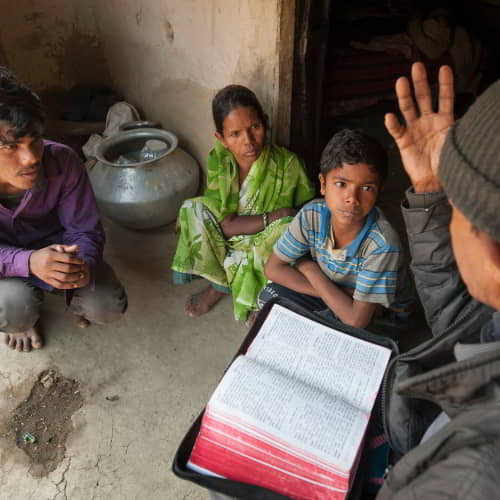
GFA World missionaries serve in the country they are from—their own home country. So they are well positioned to make a long-term difference where God has placed them. Because they already belong to the community, they can keep showing up through ordinary seasons, not only during a brief visit.
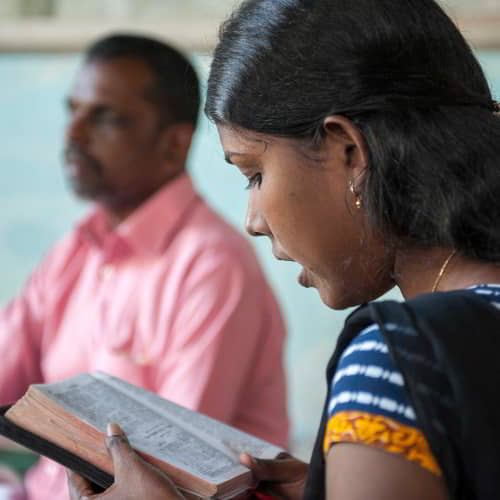
Because they already know the language and culture, they can work alongside local churches and other believers as they share the love and Gospel of Jesus Christ with their neighbors. That shared life helps faith conversations feel natural, not forced.
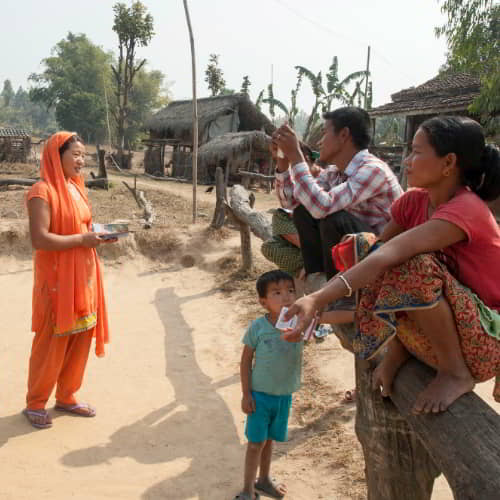
In particular, GFA women missionaries can enter into homes and villages in ways that men often cannot. They are able to cross barriers that might otherwise prevent crucial relationships from forming. This can open the door to vulnerable women, widows and children, those who are often at the greatest risk for violence, poverty and human trafficking. In day-to-day life, this can be as simple as sitting with a neighbor, offering help with a basic need, or praying when invited.
In these settings, they simply live among the people. They serve in quiet ways day after day so that people living in hard places can see Christ’s compassion through their lives. Small acts done with consistency can speak clearly, even before many words are shared.
Your monthly gift of just $45 can help one faithful woman serve those in her own country with the love of Jesus Christ with tenderness, care and understanding. She’s ready to go now, and you can help send her. She knows the language. She understands the culture. She is burdened for her people. Send her and with her the hope of Jesus Christ. A monthly gift can be a simple, steady way to support long-term care for neighbors.
Learn more about women missionaries[1] Gina A. Zurlo, Todd M. Johnson, and Peter F. Crossing. “World Christianity and Mission 2021: Questions about the Future.” ResearchGate. https://www.researchgate.net/publication/347858758_World_Christianity_and_Mission_2021_Questions_about_the_Future. Accessed January 18, 2026.
[2] Gina A. Zurlo, Todd M. Johnson, and Peter F. Crossing. “World Christianity and Mission 2021: Questions about the Future.” ResearchGate. https://www.researchgate.net/publication/347858758_World_Christianity_and_Mission_2021_Questions_about_the_Future. Accessed January 18, 2026.
[3] Gina A. Zurlo, Todd M. Johnson, and Peter F. Crossing. “World Christianity and Mission 2021: Questions about the Future.” ResearchGate. https://www.researchgate.net/publication/347858758_World_Christianity_and_Mission_2021_Questions_about_the_Future. Accessed January 18, 2026.