



The 10/40 Window: Sending Missionaries & Help
Jesus’s last words to His disciples were, “Go therefore and make disciples of all the nations, baptizing them in the name of the Father and of the Son and of the Holy Spirit.”[1] Of the 7 billion (and growing) people on the Earth, an estimated 5.32 billion live in what is called the 10/40 Window.[2] That is the majority of the world’s population living between the boundary lines of 10 and 40 degrees north latitude, which is what gives this “window” its name.

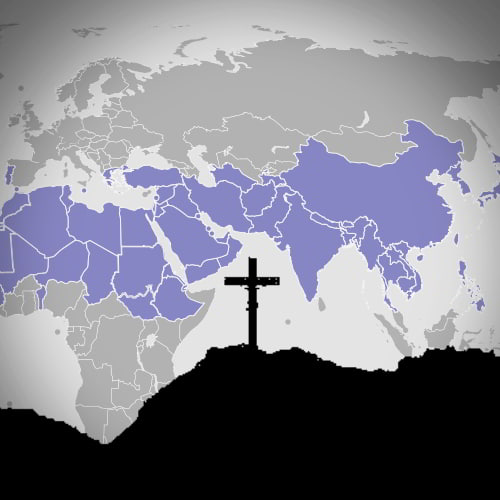
The 10/40 window nations include some of the most populous and diverse, with thousands of distinct people groups, languages and religions. The phrase ‘10/40 window’ was coined by missionary and researcher Luis Bush in 1990. His research on world populations and religions led him to draw two lines on a map of the world―one at 10 degrees north latitude and the other at 40 degrees north latitude.[3] This area holds the highest concentration of humanity on the globe. Close in the ends of those two lines, and you get a rectangle, not unlike a window.
The 10/40 Window is where some of the world’s worst poverty and societal issues exist. Deep cycles of generational poverty, low economic opportunity and lack of education are experienced by many of these people groups. In the 10/40 window, facts and statistics include:
- More than 80 percent of the poorest of the poor live in this region.[4]
- 16,000 different people groups have been identified.[5]
- 5 out of every 6 unreached people groups are in the 10/40 Window.[6]
- The largest percentage of those who have yet to hear the Gospel in this region are in South Asian countries[7]
GFA World believes in serving the “least of these” in this world, those who live in the deepest poverty with little to no chance of having a life defined by anything other than need. This commitment has led GFA to focus daily on this window.
GFA missionaries are born and raised in the countries where they serve. They understand the language, culture, etiquette and challenges faced by those they long to love and care for in some of the world’s worst conditions. GFA workers are humbly serving people every day in difficult situations with tenderness and care. They want to see those they serve experience changed lives, both inside and out.
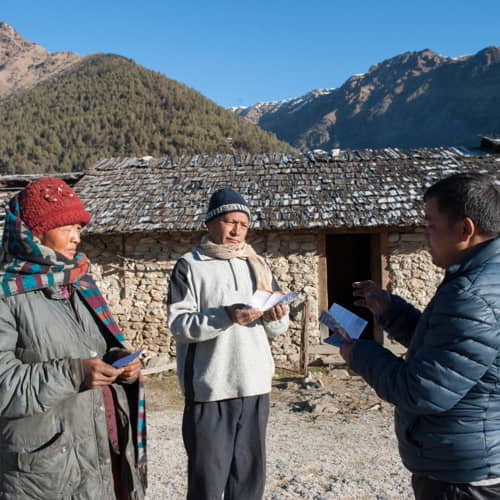

Pesach was one such person who both experienced this change and became the catalyst for change in the lives of others. He held a good position as a police investigator, his family was taken care of and he enjoyed good health. All was well on the outside, but on the inside, something was missing.[8]
One night, three Christians visited his home and told him about the new life he could have with Jesus Christ. Pesach lived within the 10/40 window. Missionaries came bringing the Good News that he needed. It changed him from the inside, and then his outside changed, too.
Pesach joined GFA’s ministry and became a GFA national missionary. He went to his home village with his family and started praying. Despite opposition, Pesach continued to bring the Good News of Jesus to the village and saw many lives and hearts changed.
Pesach is just like other GFA national missionaries: he is from the very country he loves and knows and wants to serve. He and his family were able to connect with the people God had put in his home village. He was able to get the training and resources he needed because of generous partners through GFA.
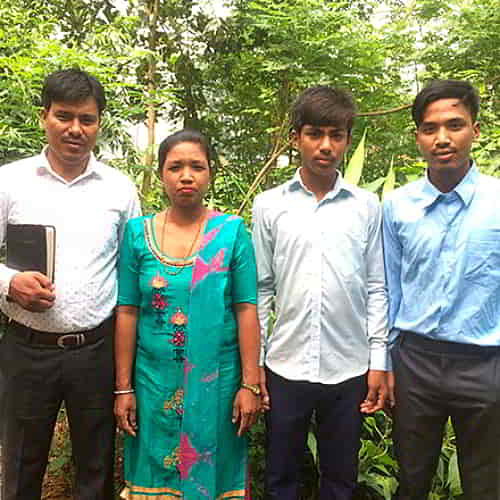
For just $30 a month, you can sponsor someone like Pesach, who was changed and then brought change to others through the Gospel. Many men and women like Pesach want the opportunity to give their time and energy to loving those in some of the most difficult places of our world, including that window between 10 and 40 degrees north latitude.
You can order a 10/40 map from GFA today by calling 1-800-946-2742 and start praying for who and where you want to support. GFA missionaries bring hope, but they also bring resources from GFA, too. From wells to farm animals to child sponsorships, GFA workers are always looking for how they can practically bless those in need.
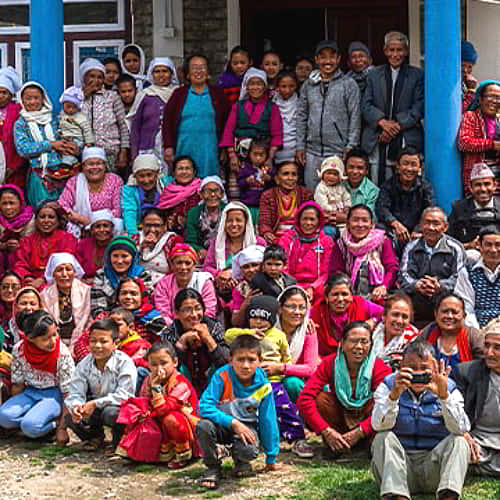
When you sponsor a national missionary, your provision allows them to serve all the people in their community. You become directly connected to ministry that is happening in these far-off countries and a part of the life-changing work of GFA national missionaries.
Pesach and his family experienced life change, but even better than that is the change they saw in the lives of those God asked them to serve. Pesach’s mission field was his home, and GFA helped equip him for the good work. You can help raise up the next generation of national missionaries by sponsoring one today.
Learn more about missionaries in Africa[1] Matthew 28:19. New King James Version.
[2] “What Is the 10/40 Window?” Joshua Project. Accessed July 7, 2023. https://joshuaproject.net/resources/articles/10_40_window#:~:text=The%2010%2F40%20Window%3A%20The%20Unreached%20Peoples%20and%20Cities,over%20one%20million%20in%20population.
[3] Korte, Hannah de, and David Onnekink. 2020. “Maps Matter. The 10/40 Window and Missionary Geography.” Exchange 49 (2): 110–44. https://doi.org/10.1163/1572543x-12341558.
[4] Ibid.
[5] “Affinity Blocks & People Clusters.” Joshua Project. March 2007. https://joshuaproject.net/assets/media/articles/affinity-blocs-and-people-clusters.pdf.
[6] “Status of World Evangelization 2022.” Joshua Project. April 2022. https://joshuaproject.net/assets/media/handouts/status-of-world-evangelization.pdf.
[7] Ibid.
[8] “New Believer Becomes Ministry Catalyst.” GFA World. April 2023. https://www.gfa.org/news/articles/new-believer-becomes-ministry-catalyst-wfr23-04b/.