
Do Christian Medical Missions Work?
Lack of quality medical care around the world is a major problem, and many organizations are seeking to address it, both secular and Christian. Medical missions are a signifianct way that GFA missionaries can show people Christ’s love in a very practical way.
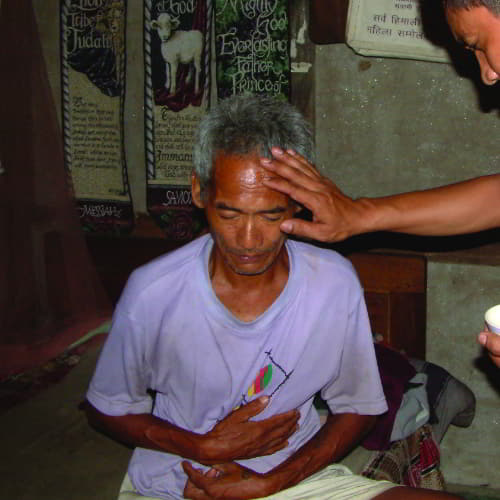
One life that has been impacted by GFA’s medical ministry is Curren’s.
The 40-year-old father worked in someone’s field and ran a shop in the village. He earned enough to put food on the table for his wife, three children and elderly mother, but not much else. That all changed when Curren suddenly fell ill. Severe pain in his head and stomach began, and he had no idea what was causing it. Standing up made him dizzy, and the nearly unbearable pain made working in the field—his main source of income—impossible. Curren needed medical attention, but the closest quality hospital was 50 miles away, and he had no transportation. Even if the hospital had been next door, Curren would not have been able to pay for treatment since he hadn’t been working. He sought out a local witch doctor, but that didn’t improve Curren’s condition. He remained unable to work and unable to provide.
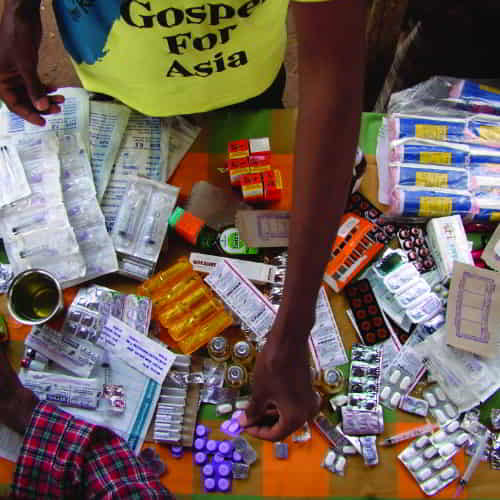
Then a leaflet arrived announcing a free medical camp organized by GFA’s medical ministry. Curren couldn’t walk the four miles to the camp, so he recruited a neighbor to transport him and his wife on a bicycle. It was a trek, but they reached the camp. While he waited to see a doctor, Curren sat, received refreshments and listened to speakers. They shared about health issues, hygiene and the love of God. Curren absorbed the words. Then he received medicine to treat his illness, free of charge.[1] Curren could return to work and continue providing for his family with restored health.
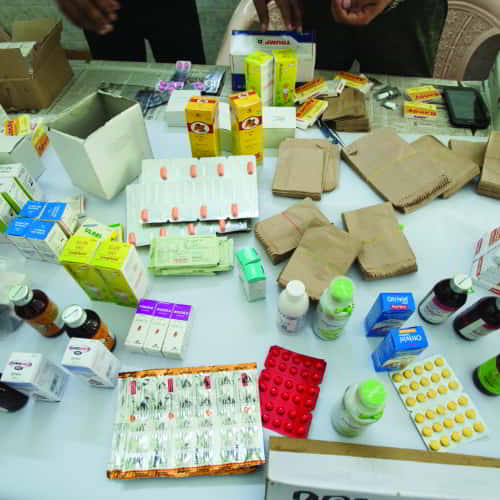
Each year, GFA missionaries host hundreds of medical camps, with each camp typically serving 200 to 1,000 people. Skilled doctors and medical staff bring medicines, vitamins and health training into remote villages, crowded slums and underserved areas. People like Curren may rarely have the chance to see a doctor in these locations. Though thousands of people have received care, there is still much work to do.[2]
National Missionaries: Long-Term Healthcare Impact
National missionaries serve as the backbone of GFA’s medical outreach across Africa and Asia. Staffing hospitals remains a challenge almost everywhere, particularly in rural and remote settings. The World Health Organization projects a shortfall of 10 million health professionals globally by 2030. National workers bridge this gap through long term commitment to their communities.
These ministers live among the people they serve. Because national missionaries understand local languages and cultural contexts, they build trust that no outsider could replicate. Their presence extends far beyond short term medical mission trips. They remain in villages year after year, following up with patients and addressing ongoing health needs.
The difference between visiting teams and resident workers shapes health outcomes profoundly. A doctor who arrives for a week-long camp can diagnose and treat. A national minister who stays builds relationships that enable preventive care, health education and sustained behavioral change.
National missionaries organize and staff the medical camps that bring healing to remote areas. These workers serve with sincere devotion to be part of Christ’s transforming work in their communities. They are willing to sacrifice all so that others may experience the God who gave Himself for them. Their daily presence makes sustained ministry possible where periodic visits alone cannot.
This sustained presence allows national workers to address both immediate health crises and systemic issues. They teach families about nutrition, hygiene and disease prevention. They accompany patients to follow-up appointments. They pray with community members through illness and recovery. This relational approach creates lasting change that short term visits cannot achieve.
Healthcare Professionals Serving Remote Communities
Teams of doctors nurses and medical professionals form the clinical core of GFA’s medical camps. These healthcare workers bring specialized training to areas where such expertise rarely reaches. Many camps feature experienced physicians who diagnose conditions, prescribe treatments and identify patients needing advanced care.
The patient care provided extends beyond basic treatment. By 2030, the largest shortages will occur in South Asia, with a projected deficit of 3.2 million workers. Local healthcare workers help address this gap by partnering with visiting doctors during camp events.
Nurses play a crucial role in delivering compassionate care. They measure vital signs, administer medications and educate patients about managing chronic conditions. Healthcare professionals work alongside community health volunteers who translate medical instructions and ensure patients understand treatment plans. This collaborative model maximizes the impact of each camp.
The doctors nurses teams also train local healthcare workers in basic medical skills. Village health volunteers learn to recognize warning signs of common illnesses. They discover how to provide first aid until professional help arrives. This knowledge transfer strengthens community capacity to respond to health emergencies between camp visits.
Training extends beyond emergency response. Volunteers learn to monitor blood pressure, identify malnutrition in children and recognize symptoms requiring immediate referral. These skills create a network of informed community members who can intervene early, preventing minor health issues from becoming life-threatening crises.
Patient care at medical camps reflects Christ’s compassion in tangible ways. Each person receives individual attention regardless of their ability to pay. Medical professionals take time to listen to concerns and explain diagnoses clearly. This dignified treatment often represents the first respectful healthcare interaction many patients have experienced.
Transforming Communities Through Comprehensive Care
GFA’s medical ministry operates within the broader context of struggling healthcare system infrastructure across Africa and Asia. More than 60% of the world’s rural population lives in the Asia-Pacific region. Many low- and middle-income countries struggle with chronic lack of rural medical staff, with over 68% of doctors working in urban areas.
Local churches frequently serve as medical camp venues. These familiar gathering places put patients at ease and demonstrate the fellowship’s commitment to community wellbeing. Church buildings provide shelter, seating and space for organizing treatment stations. The partnership between medical teams and these worship communities reinforces the message that God cares about physical health as well as spiritual needs.
GFA’s approach aligns with what organizations like World Medical Mission recognize as essential components of effective healthcare outreach. Medical missionaries who work outside Christian institutions and dedicate themselves to learning local languages thrive in these settings. They contribute to systems functioning without obvious need of expatriate support. Their cultural fluency enables deeper community engagement than transient visits permit.
This medical outreach transforms entire communities. Families no longer watch loved ones suffer without hope of treatment. Children attend school instead of staying home to care for sick parents. Breadwinners return to work, lifting households out of poverty. These ripples of healing extend far beyond the individuals treated at camps.
The transformation reaches into social structures as well. Communities that once viewed illness as inevitable fate begin understanding disease prevention. Mothers who learned proper nutrition at camps teach neighbors. Men who recovered from treatable conditions become advocates for health-seeking behavior in their villages.
Healthcare professionals demonstrate Christ’s love through skilled, compassionate service.[3] Millions die yearly from preventable diseases like malaria and cholera due to lack of care. Free medical camps offering checkups, medicines and prenatal care bring hope and healing to vulnerable communities, demonstrating practical compassion that reflects the heart of God.
Medical ministry creates space for spiritual conversations as well. When people experience physical healing through Christ’s followers, they often become curious about the faith that motivates such service. Many who come seeking medicine leave having encountered the Great Physician Himself.
It takes a lot of support to offer medicines and treatment for free, so the medical camps rely on generous believers around the world. Consider partnering with us to reach those who need it the most.
By partnering with GFA’s medical missions, you can help solve many people’s health problems.
[1] “Administering Mercy, Prescribing Love.” GFA World. October 2024. https://www.gfa.org/news/articles/administering-mercy-prescribing-love-wfr24-09/.
[2] Ibid.
[3] “GFA World is Transforming Communities.” GFA World. December 16, 2025. https://gospelforasia.org/.