
10 40 Window Map

In Which 10/40 Window Countries Does GFA Work?

GFA World has ministries in over twenty nations, many of which are in the 10/40 window. This region stretches between 10 degrees north of the equator and 40 degrees north latitude. It is often called the resistant belt due to the spiritual challenges present. Countries like Bangladesh, Sri Lanka and Nepal are largely poor and desperate for the Gospel, and GFA is working to address these problems.

Understanding the 10/40 Window

The 10/40 window spans vast regions across North Africa, the Middle East, and Southeast Asia. More than two-thirds of the world’s population—approximately 5.4 billion individuals—live in the 10/40 window.[8] The 10/40 window is home to the majority of the world’s Muslims, Hindus, and Buddhists. Roughly 95% of residents have not yet heard the good news of Jesus Christ.

According to research from Joshua Project, an estimated 3.45 billion individuals reside in approximately 5,911 unreached people groups within this region.[9] These communities have little or no access to the Gospel message. The region contains approximately 90% of the world’s unreached people groups.[10] Nations spanning from Africa and Asia face both spiritual darkness and economic hardship.

Reaching these communities fulfills the Great Commission. The window encompasses countries across Africa the Middle East and Asia. Even nations like South Korea, which has experienced remarkable Christian growth, remain surrounded by millions who have yet to hear. Geographic, political, and religious barriers make ministry in this region uniquely challenging.

The Strategic Importance of These Nations

The concentration of least reached communities in the 10/40 window represents the greatest remaining mission field. Most residents practice Islam, Hinduism, or Buddhism, with deeply rooted religious traditions spanning millennia. Cultural barriers, government restrictions, and persecution create significant obstacles for sharing hope. Yet God is at work, transforming lives and establishing communities of faith. His love reaches even the most isolated and forgotten communities.

Many countries within the window experience extreme poverty alongside spiritual need. Roughly 80% of the world’s poorest people live within this region.[11] Lack of access to clean water, adequate healthcare, and education compounds suffering. Natural disasters, political instability, and economic challenges create ongoing humanitarian crises. National missionaries understand local languages, cultures, and needs, making them especially effective in serving these communities.

The window extends across portions of North Africa the Middle East, Central Asia, South Asia, and East Asia. This vast geographic expanse includes dozens of distinct nations and hundreds of ethnic groups. Each community possesses unique languages, customs, and cultural practices. Reaching them requires both cultural sensitivity and spiritual discernment.

Serving in Bangladesh

Bangladesh is a lush, green landscape marred by brutal poverty, corruption and unrelenting natural disasters. Though it was once among the wealthiest areas of South Asia, it is now one of the poorest. Over a third of the population lives below the poverty line.[1]

Recent World Bank data shows that 24.3% of Bangladesh’s population lives below the national poverty line.[12] Natural disasters, including devastating floods and cyclones, regularly devastate communities across the low-lying delta region. Roughly two-thirds of Bangladesh’s land lies at an elevation of five meters or less. This vulnerability exposes over 165 million people to recurring natural disasters.

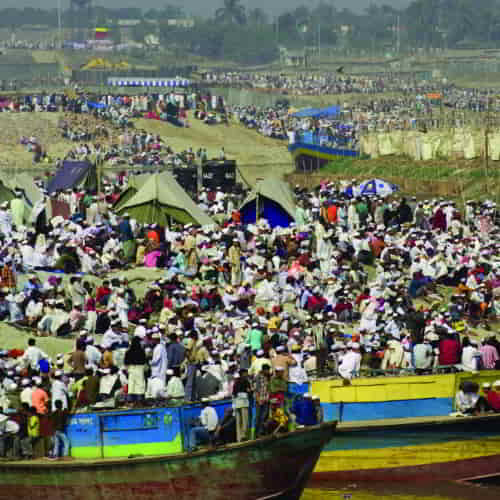
About 387 people groups, adding up to 155 million people, call Bangladesh home. Of that number, only one percent is considered Christian.[2] The nation’s residents are divided among 387 distinct cultural communities, creating significant linguistic barriers. Many of these groups have never heard about God’s love for them. Remote villages remain isolated from both economic opportunity and spiritual hope.

Compounding the nation’s issues are a low literacy rate—just over 50 percent—and persecution of the few Christians who live there.[3] Despite progress in some areas, urban poverty remains high, with nearly 19% of city dwellers facing economic hardship.[13] The country’s vulnerability to climate change and environmental degradation costs roughly $6.5 billion annually. This represents 3.4% of GDP lost to environmental challenges each year.

Air and water pollution contribute to major health challenges, causing nearly 28% of deaths. Monsoon flooding displaces thousands of families annually, destroying homes and livelihoods. Economic pressures force many to migrate to urban slums seeking better opportunities. Yet even in these difficult circumstances, God’s grace brings transformation and hope to families discovering His love. National missionaries serve faithfully despite challenging conditions and social pressures.

Reaching Sri Lanka

The island nation of Sri Lanka is world-famous for its tea. Its sandy beaches and lagoons make it a popular tourist destination; however, this beautiful land is scarred by years of internal strife and natural disaster. A bloody civil war lasting 26 years and claiming 60,000 lives just ended in 2009.

The conflict’s aftermath continues to affect communities, particularly in the northern and eastern regions. Decades of war left infrastructure damaged, families divided, and communities traumatized. Economic recovery has been slow and uneven across different regions. Ethnic tensions still simmer beneath the surface in some areas.

Now, as the nation continues to recover, 23 percent of the population is below the poverty line. However, World Bank estimates show poverty doubled between 2021 and 2022, reaching 25%.[14] This dramatic increase added 2.5 million people into poverty within just one year. Economic crises, rising prices, and job losses have pushed many families into deeper hardship.

Inflation reached 46% in 2022, devastating household budgets and forcing difficult choices. Jobs in services and industry contracted, pushing workers into lower-paying agricultural employment. Remittances declined, removing a critical source of income for many families. Food insecurity increased as prices rose and incomes fell simultaneously. Many families struggle to afford even basic necessities.

A small 10 percent of the 20 million people in Sri Lanka are believers, while the majority practice traditional Asian religions.[4] The nation’s religious landscape is complex, with Buddhism holding a constitutionally protected position.[15] Most Sinhalese, comprising 75% of the population, practice Theravada Buddhism. Most Tamils follow Hinduism, creating distinct religious and cultural communities.
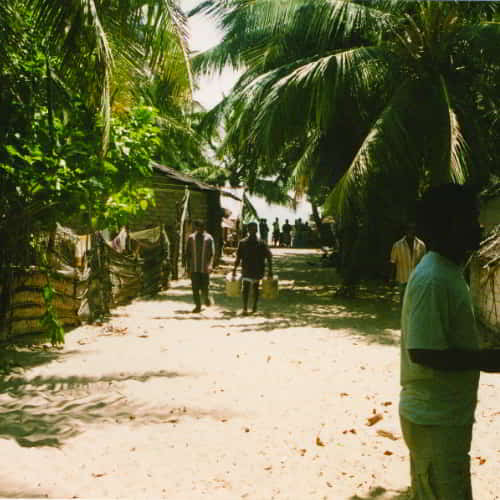
Christians face social pressure and occasional discrimination in some areas. Despite these challenges, small communities of faith continue to grow and serve their neighbors. Believers demonstrate Christ’s love through practical service, meeting physical and spiritual needs. God is working powerfully to bring transformation even in difficult circumstances. Faithful missionaries continue serving despite economic hardship and cultural opposition.

Ministry in Nepal

As home to eight of the world’s highest mountains—including Mt. Everest—Nepal thrives on people from around the world coming to take in the scenery and climb the peaks. Even with such a booming tourist industry, Nepal is largely underdeveloped. It is one of the poorest countries in the world. A quarter of the population lives below the poverty line.[5]

According to the Fourth Nepal Living Standards Survey released in 2024, 20.27% of the population lives below the poverty line.[16] This means approximately six million Nepalis struggle with grinding poverty daily. The 2015 earthquake and COVID-19 pandemic significantly hindered poverty reduction efforts. Progress has been slower than expected despite government programs and international aid.

The devastating 2015 earthquake killed nearly 9,000 people and destroyed hundreds of thousands of homes. Reconstruction has been slow, with many families still living in temporary shelters. The pandemic pushed an estimated 4% of Nepalis below the poverty line. Economic recovery has been uneven, benefiting urban areas more than rural communities.

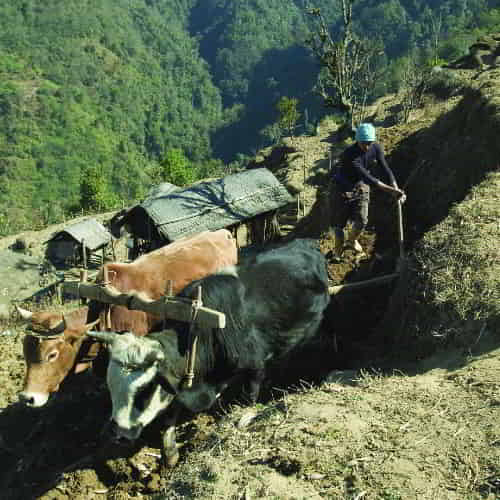
The 30 million people, sorted into 333 people groups, are separated by rough mountain trails in small villages, which can take days to reach. These remote communities often lack basic infrastructure, including roads, schools, and healthcare facilities. Geographic isolation creates significant barriers to sharing hope with those who have yet to hear. Many villages have no electricity, running water, or modern conveniences.

Nepal’s mountainous terrain means some villages remain accessible only by foot, requiring multi-day journeys. During monsoon season, landslides frequently block mountain paths, cutting off entire communities. Winter snows make travel impossible in higher elevations for months at a time. This physical isolation mirrors spiritual isolation, as many communities have no Christian presence whatsoever. Some groups have lived for generations without ever hearing about salvation through faith.

A mere three percent of Nepal is Christian, and a large portion of the rest of the people practice a traditional Asian religion.[6] Hinduism and Buddhism are deeply woven into Nepali culture and identity. Many villages have never heard about the hope found in Christ. Traditional beliefs and practices shape daily life and community relationships.

Rural poverty rates remain especially high, with 24.66% of rural residents living below the poverty line. Remittances from family members working abroad help sustain many households. Without these funds, poverty rates would be significantly higher. Agricultural challenges, limited economic opportunities, and geographic isolation perpetuate cycles of poverty. Young people often leave villages seeking work, leaving behind aging populations.

Responding with Compassion and Hope

GFA’s national missionaries serve in some of the most challenging environments on earth. They travel to remote villages, crossing dangerous terrain to reach isolated communities. These faithful servants demonstrate God’s love through both words and actions. They provide clean water, medical care, educational support, and practical assistance. Every service rendered reflects Christ’s compassion for those who suffer.

Missionaries understand the languages and customs of the communities they serve. This cultural familiarity allows them to build trust and share effectively. They live among the people, experiencing the same hardships and challenges. Their sacrifice reflects Christ’s love in tangible, meaningful ways. Relationships develop naturally as missionaries serve consistently over months and years.

In Bangladesh, missionaries work among diverse communities spread across the delta region. They navigate flooding, persecution, and economic challenges to serve faithfully. Small communities of believers are emerging, even in areas previously closed to the Gospel. Families discover hope as they witness love demonstrated through practical service. Children receive education, the sick receive care, and the hungry find food.

In Sri Lanka, ministry continues despite economic crises and social pressures. Believers care for widows, provide disaster relief, and establish churches where none existed. The love of Christ is transforming families and communities. Even amid ongoing challenges, God’s faithfulness shines through transformed lives. Communities once divided by ethnic conflict discover unity in Christ.

In Nepal, missionaries trek into mountain villages others cannot or will not reach. They bring hope to communities isolated by both geography and spiritual darkness. Despite legal restrictions and social opposition, God is working powerfully. Hearts are opening to truth as people experience genuine love and compassion. Entire villages are discovering freedom from fear and bondage to tradition.

Partnering for Impact

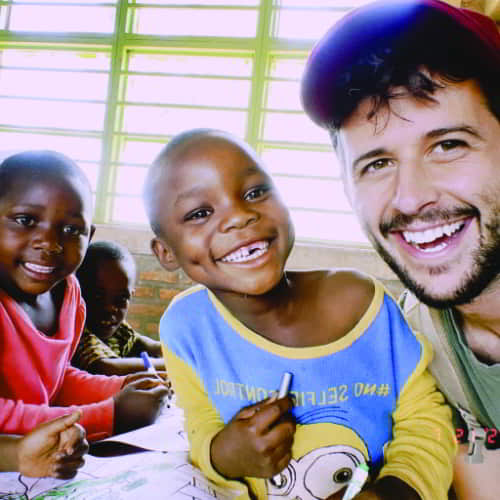
GFA is working in these and many other countries in Asia and now in Rwanda, Africa, as well. With such large populations of people who have yet to hear the Gospel, there is much work to do. National missionaries are sent to regions where no one else is working to help meet physical needs and establish churches. Through God’s grace, these faithful workers demonstrate Christ’s love through practical service.

Consider partnering with us to help nations within the 10/40 window by sponsoring one of these national missionaries. It just takes $45 a month,[7] and you can help a missionary make an impact in places like Bangladesh, Sri Lanka or Nepal.

Learn more about the 10/40 window map!
[1] World Bank. “Poverty and Shared Prosperity 2018.” Accessed December 13, 2023. https://www.worldbank.org/en/publication/poverty-and-shared-prosperity-2018.
[2] “Bangladesh.” GFA World. Accessed June 28, 2023. https://www.gfa.org/regions/country/bangladesh/.
[3] “Day 3: Bangladesh.” Window International Network. June 2023. https://www.win1040.org/prayercalendar/bangladesh/.
[4] “Sri Lanka.” GFA World. Accessed June 28, 2023. https://www.gfa.org/regions/country/sri-lanka/.
[5] World Bank. “Nepal – Poverty & Equity Data Portal”. November 20, 2023, https://databankfiles.worldbank.org/public/ddpext_download/poverty/987B9C90-CB9F-4D93-AE8C-750588BF00QA/SM2020/Global_POVEQ_NPL.pdf.
[6] “Nepal.” GFA World. Accessed June 28, 2023. https://www.gfa.org/regions/country/nepal/.
[7] “National Missionaries.” GFA World. Accessed June 28, 2023. https://www.gfa.org/sponsor/.
[8] “10/40 Window.” Joshua Project. Accessed February 19, 2026. https://joshuaproject.net/resources/articles/10_40_window.
[9] “How Many Nations Are in the 10/40 Window?” His Feet International. July 26, 2025. https://www.hisfeet.com/how-many-nations-are-in-the-10-40-window/.
[10] “Unreached People Groups.” Global Frontier Missions. Accessed February 19, 2026. https://www.globalfrontiermissions.org/missions-101/the-unreached-peoples-and-their-role-in-the-great-commission.
[11] “The 10/40 Window.” Window International Network. Accessed February 19, 2026. https://www.win1040.org/about-the-1040-window/.
[12] “Bangladesh Poverty & Equity Data.” World Bank. Accessed February 19, 2026. https://databankfiles.worldbank.org/public/ddpext_download/poverty/987B9C90-CB9F-4D93-AE8C-750588BF00QA/current/Global_POVEQ_BGD.pdf.
[13] “Poverty in Bangladesh.” Wikipedia. January 2026. https://en.wikipedia.org/wiki/Poverty_in_Bangladesh.
[14] “Sri Lanka Poverty & Equity Data.” World Bank. Accessed February 19, 2026. https://databankfiles.worldbank.org/public/ddpext_download/poverty/987B9C90-CB9F-4D93-AE8C-750588BF00QA/current/Global_POVEQ_LKA.pdf.
[15] “National Profiles – Sri Lanka.” The Association of Religion Data Archives. Accessed February 19, 2026. https://www.thearda.com/world-religion/national-profiles?u=210c.
[16] “Nepal sees less than expected decline in poverty.” The Kathmandu Post. February 13, 2024. https://kathmandupost.com/money/2024/02/13/nepal-sees-less-than-expected-decline-in-poverty.